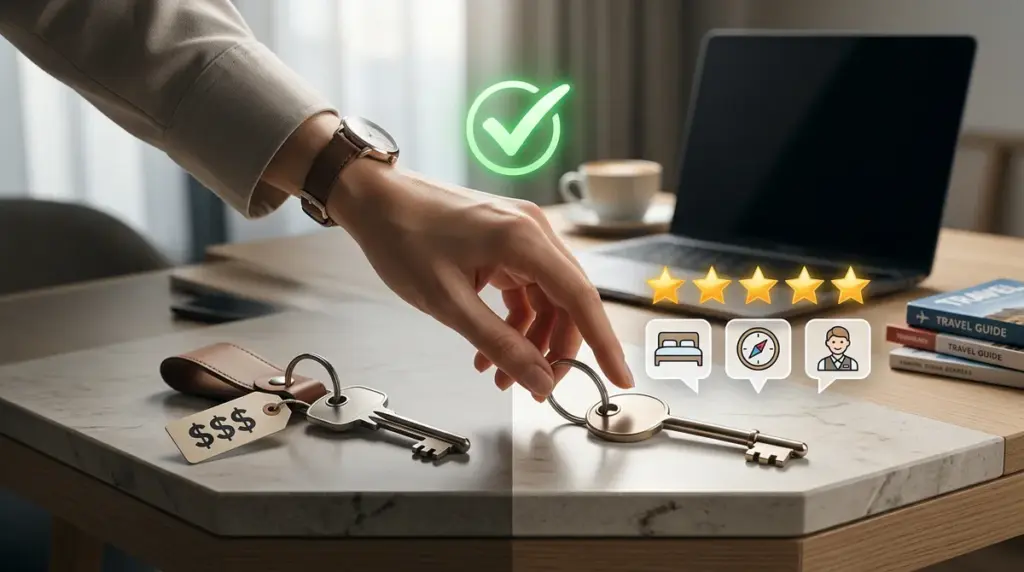
For the modern traveler, the booking journey does not begin with a budget; it begins with a filter. Before a potential guest compares the nightly rate of a boutique hotel against a branded chain, they establish a baseline of acceptable risk through social proof. In the hospitality sector, reviews are no longer just feedback; they are the primary currency of trust that determines whether a property even makes it into the final consideration set. When a hotel’s average rating falls below a specific threshold—typically 4.0 on Google or TripAdvisor—the price becomes irrelevant because the perceived risk of a poor experience outweighs any potential cost savings.
The Cornell Effect: Quantifying the Value of a Star
Research from the Cornell Center for Hospitality Research has demonstrated a direct correlation between online reputation and pricing power. The data indicates that a one-point increase in a hotel's 5-point rating allows the property to increase its price by approximately 11% without losing market share or occupancy. This suggests that travelers are willing to pay a premium for the certainty of quality. Conversely, a property with a 3.2 rating must discount its rooms significantly to attract the same volume of guests as a 4.2-rated competitor. In this environment, the review score acts as a "price floor."
Best for: Revenue managers looking to justify seasonal rate hikes or capital expenditure on room renovations.
The Threshold of Trust and the Consideration Set
Most booking platforms allow users to filter by "4 stars and up." This binary choice effectively hides thousands of properties from the consumer's view. If your property sits at a 3.9, you are invisible to a significant percentage of the market, regardless of how competitive your pricing is. The decision-making process is a funnel where reviews act as the first gatekeeper. Price only becomes a secondary differentiator once the traveler has narrowed their options down to three or four properties that all meet their minimum reputation standards.
Recency and Velocity: Why Old Praise Is Dead Weight
A high aggregate score can be deceptive. A hotel might boast a 4.5-star rating, but if the last ten reviews are from 2022, savvy travelers will assume the quality has declined or the management has changed. Review recency is a critical metric because it reflects the current state of the property. Travelers look for "Review Velocity"—the frequency with which new, positive feedback is posted. High velocity suggests a consistently high standard of service and active guest engagement.
- Recency: Reviews posted within the last 30 days carry 10x the weight of reviews older than six months.
- Volume: A 4.2 rating based on 1,000 reviews is statistically more trusted than a 4.8 rating based on 12 reviews.
- Sentiment Trends: Modern AI-driven filters on booking sites now highlight "frequently mentioned" terms like "loud construction" or "broken AC," which can kill a booking faster than a high price tag can save it.
Pro Tip: Monitor the "Review Velocity"—the rate at which new reviews appear. A sudden drop in frequency often signals a decline in service standards or a shift in staff morale that precedes a drop in search rankings and occupancy.
The Critical Role of User-Generated Content (UGC)
Professional photography is expected, but it is often viewed with skepticism. Travelers look to the "Photos by Guests" section to verify the reality of the room. If the professional photos show a sun-drenched suite but guest photos show stained carpets and cramped bathrooms, the trust gap becomes insurmountable. The visual proof provided by previous guests serves as a "fact-check" on the hotel’s marketing claims. Properties that encourage guests to share photos often see higher conversion rates because they provide the transparency that modern consumers demand before entering credit card details.
Management Response as a Conversion Tool
How a hotel handles a negative review is often more influential than the negative review itself. A defensive or generic response signals a lack of accountability. However, a specific, empathetic, and solution-oriented response can actually increase booking intent. When a traveler sees that a manager addressed a complaint about a noisy room by explaining that they have since installed soundproofing or moved the guest to a quieter wing, it mitigates the perceived risk for future guests. It demonstrates that the property is managed by humans who care about the guest experience.
Identifying "Deal-Breaker" Keywords
Not all negative reviews are created equal. A complaint about the breakfast selection is a minor preference issue. A complaint about "bed bugs," "unresponsive staff," or "hidden fees" is a deal-breaker. Travelers scan reviews for these specific keywords. If these terms appear in recent feedback, the property will likely lose the booking to a more expensive competitor that lacks these red flags. Pricing cannot fix a fundamental failure in hygiene or safety.
Optimizing the Review-to-Revenue Pipeline
To leverage reviews as a competitive advantage that supersedes price, hotels must move beyond passive monitoring. This requires an active strategy of soliciting feedback at the point of highest satisfaction—usually right after check-out or after a positive interaction with staff. By increasing the volume of recent, high-quality reviews, a property builds a "reputation moat" that allows it to maintain higher ADR (Average Daily Rate) even during market downturns. The goal is to make the value proposition so clear through social proof that the guest doesn't feel the need to cross-shop on price alone.
Focus on these three pillars to shift the decision-making focus away from the bottom line:
- Audit the "First Five": Ensure the five most recent reviews across Google, Five Reviews, and TripAdvisor are positive and responded to.
- Highlight Specificity: Encourage guests to mention specific amenities, such as the "ergonomic desk" or "high-pressure shower," which appeals to specific traveler segments like business professionals.
- Visual Transparency: Regularly update your own "candid" style photos to align guest expectations with reality, reducing the likelihood of "not as pictured" complaints.
Frequently Asked Questions
Does a 5.0 rating look suspicious to travelers?
Yes. Consumer behavior studies suggest that a perfect 5.0 rating can often feel "too good to be true" or manipulated. The "sweet spot" for conversion is typically between 4.2 and 4.7. This range suggests the property is high-quality but authentic, as a few minor, subjective complaints add a layer of realism to the feedback profile.
How much does a single 1-star review actually cost a hotel?
While the exact dollar amount varies by market, a single 1-star review on the first page of results can lead to a 5-9% drop in revenue for that specific period if left unaddressed. The cost is found in the "lost opportunity" of guests who never click through to the booking page after seeing the negative headline.
Should I prioritize Google Reviews or TripAdvisor?
Google Reviews are currently the most critical for top-of-funnel discovery because they directly impact local SEO and Map pack rankings. However, TripAdvisor and Five Reviews remain the primary "validation" sites where users go for deep-dive research before finalizing a transaction. You must maintain a presence on both, but Google is the primary driver of initial visibility.