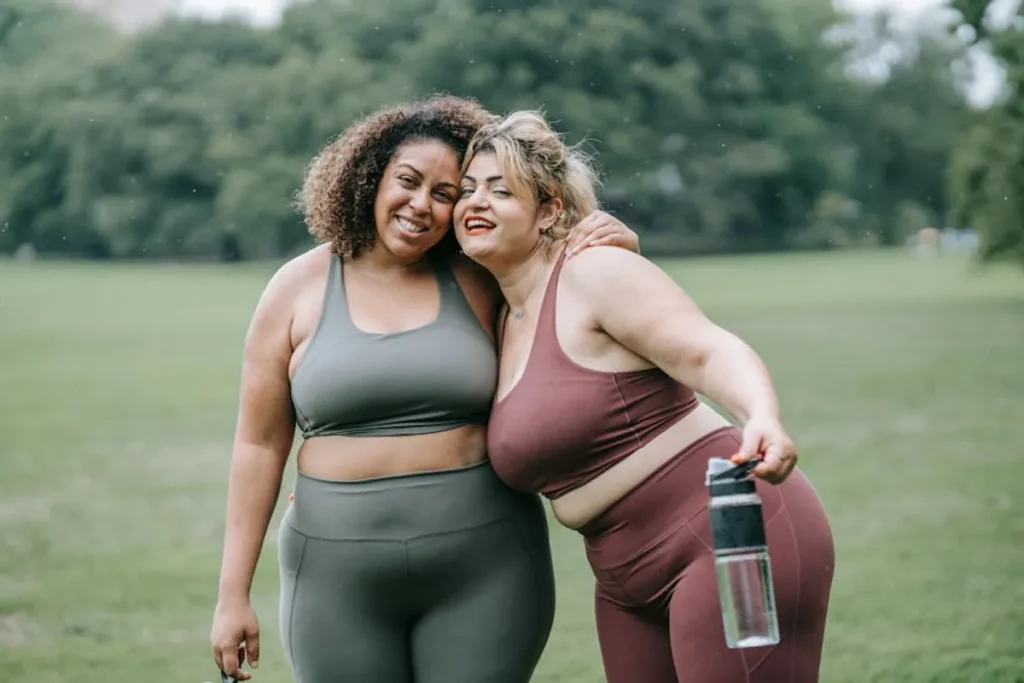
The acronym BBW, standing for "Big Beautiful Woman," functions as a specific descriptor within online communication, particularly in dating contexts and certain subcultures. Understanding its use requires acknowledging its origins as an empowering self-identifier for women who embrace their larger body types, while also recognizing its frequent application as a search term or category label, which can carry different implications. This term is not simply a neutral size descriptor; it is imbued with cultural, social, and often sexual connotations that shape its interpretation across various digital platforms, from social media to dedicated dating sites.
Origins and Evolution of BBW
The term "Big Beautiful Woman" emerged in the late 1970s and early 1980s, initially within communities and publications dedicated to celebrating larger women. Its creation was a direct response to prevailing societal beauty standards that often marginalized or ignored women who did not fit conventional slim ideals. The aim was to reclaim and positively frame a body type that was frequently stigmatized. Over time, as internet usage expanded, "BBW" transitioned from a niche community term into widespread online slang and a common search query. Its digital proliferation broadened its audience and, concurrently, diversified its usage patterns.
Initially, BBW served as a collective identity, fostering a sense of community and shared appreciation. With the advent of online dating and specialized platforms, it evolved into a categorization tool. This shift meant that while some continued to use it for self-affirmation, others adopted it as a functional label to identify specific preferences or target audiences, sometimes detaching it from its original empowering intent.
Specific Meanings and Contexts
The interpretation of BBW is heavily dependent on the context in which it appears:
- Self-Identification: Many women use BBW to describe themselves, signaling confidence and pride in their body shape. This usage often aligns with body positivity movements, emphasizing self-acceptance and challenging narrow beauty standards. It can be a powerful statement of identity within personal profiles or community discussions.
- Dating and Romantic Preferences: In online dating, BBW is frequently used as a keyword or filter by individuals seeking partners who are larger-bodied. This application is often specific to sexual or romantic attraction, indicating a preference for women described by this term. Dating apps and websites often include "BBW" as a selectable body type or interest category.
- Content Categorization: On platforms hosting adult content, BBW functions as a genre label. This use is primarily descriptive for content classification and audience targeting, often focusing on visual representation rather than personal identity or community building.
- General Online Slang: In broader online discussions or social media, BBW can be used casually to refer to a larger woman. This general usage can sometimes lack the intentional nuance of self-identification or dating preferences, potentially leading to misinterpretation if the speaker's intent is not clear.
Usage in Text and Online Communication
In text messages, direct messages, and social media comments, BBW typically serves as a concise descriptor. Its brevity makes it suitable for quick communication, but also means it carries a significant amount of implied meaning that can be lost without shared context. For instance, a person might text "Looking for BBW tonight" on a dating app, clearly indicating a preference for a partner. Conversely, a comment like "She's a BBW" on a social media post might be intended as a compliment or simply a physical description, but could be perceived differently depending on the commenter's relationship to the subject and the overall tone of the interaction.
Online forums and communities dedicated to plus-size fashion, body positivity, or specific dating interests frequently use BBW as a primary term for organizing discussions and connecting members. Here, its meaning is generally understood and accepted within the community, fostering a sense of belonging among users who identify with the term.
Pro Tip: When encountering or considering using the term "BBW," prioritize context and consent. While it can be an empowering self-identifier, using it to label someone else without their explicit preference can be reductive or even offensive. Always consider whether the term is being used to affirm identity, express a personal preference, or to categorize in a way that might objectify.
Distinctions from Related Terms
It is important to differentiate BBW from other terms that describe larger body types:
- Plus-size: This term is widely used in the fashion industry and often refers to clothing sizes beyond standard ranges. It is generally a neutral, commercial term, less loaded with specific romantic or sexual connotations than BBW.
- Curvy: "Curvy" typically describes a body shape with pronounced curves, often implying an hourglass figure, regardless of overall size. A woman can be curvy without being "big" in the BBW sense, and vice-versa.
- Fat: While "fat" is a neutral descriptor for body composition, it has historically been used as a pejorative. The fat acceptance movement has sought to reclaim "fat" as a neutral or positive term, but its common usage still often carries negative associations, which BBW was specifically coined to avoid.
BBW, therefore, occupies a specific niche, combining elements of size, perceived beauty, and often a romantic or sexualized context that distinguishes it from these broader or more neutral descriptors.
Applying This Understanding Online
For anyone navigating digital spaces, understanding the nuances of BBW is crucial for effective and respectful communication. For individuals, knowing the term's dual nature allows for more informed self-description or clearer articulation of preferences. For content creators or community managers, recognizing the term's specific connotations helps in categorizing content appropriately, moderating discussions sensitively, and understanding audience demographics. Misusing or misinterpreting BBW can lead to misunderstandings, alienate communities, or perpetuate stereotypes. Conversely, using it with awareness of its history and varied applications can foster inclusivity and facilitate clearer communication within specific online contexts.
Frequently Asked Questions
What is the primary difference between BBW and plus-size?
BBW ("Big Beautiful Woman") carries specific connotations of attractiveness and often romantic or sexual appeal, frequently used as a self-identifier or preference in dating. Plus-size is a broader, more neutral term primarily used in fashion to describe clothing sizes beyond conventional standards, without the same inherent romantic or sexual framing.
Is BBW always considered a positive term?
While BBW was coined with empowering intentions and many women use it positively for self-identification, its reception varies. When used by others to label someone without their consent, or in contexts that objectify, it can be perceived negatively. The term's positivity depends heavily on context, intent, and individual preference.
Where is BBW most commonly used online?
BBW is most prevalent on dating websites and apps, in online forums and communities dedicated to body positivity or plus-size appreciation, and within specific adult content categories. It also appears in general social media discussions as a descriptive term.
Can men be referred to as BBW?
No, the term BBW specifically refers to "Big Beautiful Women." There are analogous terms for men, such as BHM ("Big Handsome Man"), but BBW is exclusively gendered for women.