
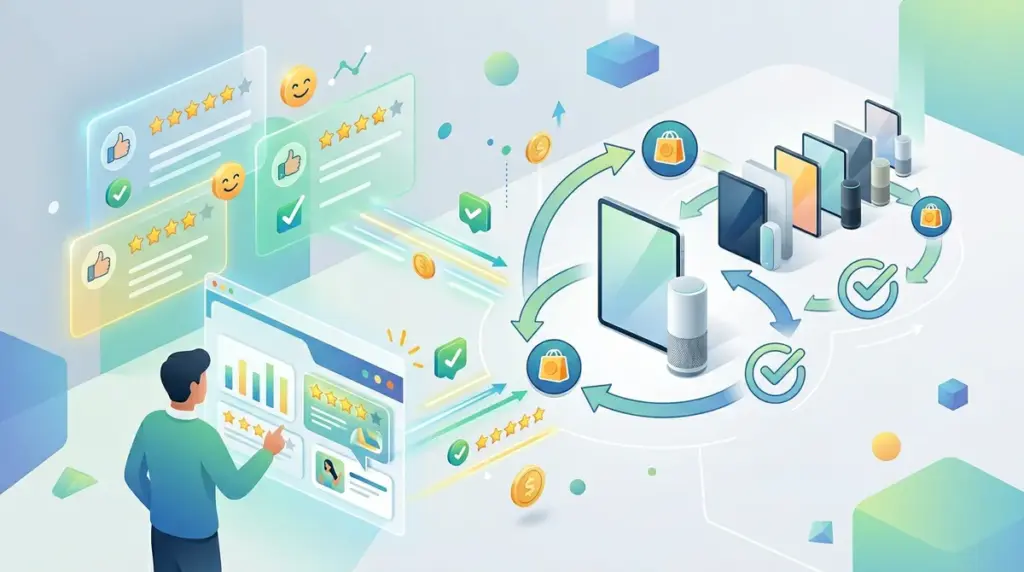
Customer acquisition costs (CAC) continue to climb across every digital channel, making the transition from a one-time buyer to a repeat customer the most critical pivot in a brand's growth strategy. While most marketers view online reviews as a top-of-funnel tool to build initial trust, their true commercial value lies in their ability to sustain a long-term feedback loop that drives lifetime value (LTV). A customer who sees a brand actively engaging with feedback and evolving based on user input is significantly more likely to return than one who perceives the transaction as a sterile, one-off event. This evolution highlights that public feedback is a core part of brand strategy, directly impacting customer retention and long-term growth.
The Economic Reality of Review-Driven Retention
In a saturated market, the second purchase is rarely about the product alone; it is about the reliability of the experience. Reviews serve as a public record of that reliability. Data consistently shows that increasing customer retention by just 5% can increase profits by 25% to 95%. Reviews influence this by reducing the "post-purchase dissonance" that often prevents a second order. When a buyer sees a community of recurring users praising long-term durability or consistent customer support, it validates their initial decision and lowers the psychological barrier to re-ordering.
Best for E-commerce: Displaying "Verified Buyer" badges alongside reviews specifically mentioning longevity (e.g., "Six months later and still works perfectly") directly counters the fear of planned obsolescence.
Post-Purchase Validation and the Psychological Loop
The influence of reviews does not stop once the "Buy" button is clicked. Many consumers return to review sections after their purchase to compare their experience with others. This behavior reinforces brand loyalty if the experiences align. If a customer encounters a minor issue but sees in the reviews that the company typically resolves such issues within 24 hours, they are less likely to churn and more likely to give the brand a second chance.
This creates a psychological loop where the review section acts as a living FAQ and a support forum. Brands that treat their review section as a static trophy case miss the opportunity to demonstrate active service. High-performing agencies now advise clients to treat review responses as a retention marketing channel rather than a PR chore.
Pro Tip: Use "Review-Specific Retargeting." Segment your email list to show customers reviews of products complementary to their previous purchase. If they bought a camera, show them reviews of the specific tripod or lens other buyers found indispensable. This uses social proof to drive the next logical step in their buying journey.
Identifying Friction Points via Negative Feedback
Negative reviews are often viewed as a liability, but for repeat purchase behavior, they are the most valuable data points available. They highlight the exact reasons why a customer might not return. By categorizing negative feedback into buckets—shipping delays, packaging failures, or UI bugs—a business can systematically remove the obstacles to a second purchase.
- Product Iteration: If 15% of reviews mention a specific zipper failing, fixing that zipper and announcing the "V2" update directly to those reviewers can win back churned customers.
- Service Recovery: Publicly resolving a complaint shows the original buyer (and all prospective repeat buyers) that the brand takes accountability.
- Expectation Management: Sometimes negative reviews stem from a mismatch between marketing copy and reality. Adjusting the product description based on review feedback ensures the next set of customers has accurate expectations, leading to higher satisfaction and repeat intent.
Strategic Review Requests as Re-engagement Triggers
The timing of a review request is a delicate lever for repeat business. Sending the request too early (before the customer has actually used the product) creates annoyance; sending it too late misses the window of peak engagement. For most physical goods, the "sweet spot" is 14 days post-delivery. For SaaS, it is typically after the user has reached a specific "Aha!" moment or milestone within the platform.
Best for SaaS: Trigger review prompts after a user successfully completes their first major project or export. This links the positive emotion of achievement with the act of providing feedback, reinforcing their commitment to the tool.
Leveraging User-Generated Content for Loyalty Programs
User-generated content (UGC) found in reviews—such as customer photos and videos—is more persuasive than professional studio photography for repeat buyers. It provides a "real-world" context that helps the customer visualize the product in their own life again. Integrating these reviews into a loyalty program can further cement the relationship. For example, offering points for reviews that include photos encourages the customer to interact with the brand again shortly after their first purchase, keeping the brand top-of-mind for their next need.
Optimizing Your Post-Purchase Review Funnel
To maximize repeat purchases, your review strategy must be integrated into your CRM. It is not enough to collect reviews; you must use that data to personalize the customer journey. If a customer leaves a 5-star review, they should immediately be moved into a "Brand Advocate" email flow with an exclusive discount for their next purchase. If they leave a 1-star to 3-star review, they should be moved to a "High-Touch Support" flow where a representative reaches out to solve the issue before the customer decides to switch to a competitor.
Monitoring the "Sentiment Velocity"—the speed at which sentiment changes over time—allows a brand to predict churn. A downward trend in review scores is a leading indicator that repeat purchase rates will drop in the coming quarter. Addressing the root cause of that sentiment shift is the most effective way to protect your bottom line.
Frequently Asked Questions
Do negative reviews always hurt repeat purchase rates?
Not necessarily. If a brand responds quickly and resolves the issue publicly, it can actually increase loyalty. Customers often value a brand's responsiveness and problem-solving ability more than a perfect, error-free experience. This is known as the "Service Recovery Paradox."
How often should I ask a repeat customer for a review?
Avoid fatigue. If a customer buys from you monthly, do not ask for a review every time. Limit requests to once every six months or only when they purchase a new product category they haven't reviewed before. Over-solicitation can lead to unsubscribes and brand resentment.
Which review platforms are best for driving retention?
It depends on your industry. For e-commerce, on-site reviews (like Yotpo or Okendo) are best because they can be integrated into loyalty programs. For B2B or SaaS, third-party sites like G2 or Capterra carry more weight for renewal decisions as they provide an unbiased third-party environment for feedback.
Can incentivizing reviews lead to higher repeat purchases?
Yes, if the incentive is a discount on a future order. This creates a direct path to the next transaction. However, ensure you are compliant with platform guidelines (like Google or Amazon) regarding incentivized reviews to avoid penalties.