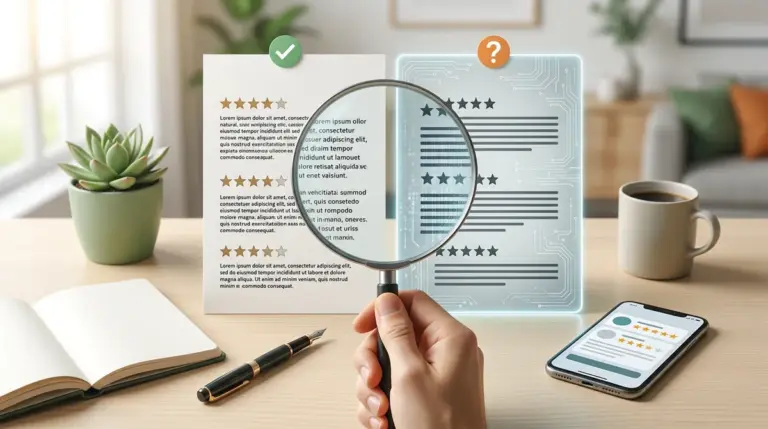


A perfect 5.0 rating was once the ultimate goal for any digital storefront or service provider. Today, that same score often acts as a deterrent. Data from the Spiegel Research Center indicates that purchase likelihood peaks when a product’s average star rating is between 4.2 and 4.5. Once a score hits a flawless 5.0, conversion rates begin to drop. This "too good to be true" phenomenon is driven by a consumer base that has become hyper-aware of review manipulation, bot-generated feedback, and the practice of review gating.
The Conversion Paradox of the Perfect Five-Star Rating
When a buyer sees a perfect score across hundreds of reviews, their internal "scam detector" triggers. In a marketplace saturated with incentivized reviews and AI-generated praise, perfection feels manufactured. Consumers are no longer looking for the best possible product; they are looking for the most honest representation of a product. A 4.7-star rating suggests a business that is excellent but human, whereas a 5.0-star rating suggests a business that is either brand new or aggressively scrubbing negative feedback.
Best for: High-ticket service providers and complex SaaS products where "perfect" performance is statistically improbable over a long timeline.
The 4.2 to 4.5 Utility Range
This specific range is often referred to as the "zone of authenticity." In this bracket, the consumer sees a high volume of satisfied users tempered by a handful of outliers who had specific, subjective issues. These minor complaints actually validate the positive reviews. If a customer sees 200 five-star reviews and five three-star reviews complaining about shipping speeds, they can make an informed decision: "I don't mind slow shipping if the product quality is high." Without those three-star reviews, the buyer has no baseline for risk.
The Psychology of Risk Mitigation in Modern E-commerce
Modern consumers engage in "negative-first" reading. They skip the glowing testimonials and go straight to the one- and two-star reviews. They aren't necessarily looking for reasons not to buy; they are looking for the "worst-case scenario." If the worst-case scenario is a minor technical glitch or a delayed response time, the consumer feels they can manage that risk. If there are no negative reviews at all, the consumer assumes the "real" risks are being hidden, which creates a high-friction psychological barrier to purchase.
Warning: Attempting to delete or hide legitimate negative reviews can lead to "Review Gating" penalties from platforms like Google and Yelp. These platforms use algorithmic detection to identify unnatural review patterns, which can result in a permanent "Consumer Alert" badge on your profile or total de-indexing.
Identifying the Red Flags of Review Manipulation
Consumers have become amateur forensic analysts when browsing reviews. They look for specific patterns that signal a lack of authenticity. If your review profile contains these elements, your "perfect" rating will likely drive customers to a competitor with a lower, more realistic score:
- The "Review Wave": A sudden influx of 50 five-star reviews in a 48-hour period after months of silence.
- Generic Language: Reviews that say "Great product, highly recommend" without mentioning specific features, use cases, or names of staff members.
- Lack of Verified Purchase Badges: On platforms like Amazon or specialized review sites, reviews not tied to a confirmed transaction carry almost zero weight.
- Over-optimization: Reviews that read like SEO copy, stuffed with keywords rather than natural human sentiment.
How Negative Reviews Shorten the Sales Cycle
It sounds counterintuitive, but a well-handled negative review can convert a skeptic faster than a dozen positive ones. When a business responds to a critical review with a concrete solution—rather than a generic "we're sorry for the inconvenience"—it demonstrates operational transparency. It shows the prospective buyer that if something goes wrong, the company will actually fix it. This reduces the perceived risk of the transaction.
For agencies and marketers, this means the goal of reputation management should not be "deletion," but "resolution." A negative review followed by a public, successful resolution is a powerful trust signal that a perfect 5.0 can never replicate.
Operational Strategies for Authentic Feedback Loops
To maintain a high but believable rating, businesses must move away from "cherry-picking" which customers they ask for feedback. Instead, automate the request process to ensure a representative sample of your entire customer base is heard. This naturally creates the "jagged" rating profile that consumers trust.
Differentiator: Authentic profiles typically show a "J-shaped" distribution—a massive spike in 5-star reviews, a small bump in 1-star reviews (the outliers), and very little in the 2-to-4 range. A "flat" profile where every review is 5 stars is the primary indicator of a manipulated feed.
Actionable Steps to Build Trust Through Imperfection
Instead of fearing the occasional dip in your average score, use it as a tool to refine your market positioning and build long-term authority. Follow these steps to align your review strategy with current consumer behavior:
1. Stop Review Gating: Do not use "pre-surveys" to filter out unhappy customers before sending them to a public review platform. It is a violation of FTC guidelines and erodes trust when the "real" complaints eventually leak onto social media or third-party forums.
2. Showcase the "Cons": On your own site, don't just feature the best testimonials. Include a "What could be better" section. This transparency reduces return rates because customers have a realistic expectation of the product's limitations.
3. Prioritize Recency Over Rating: A 4.4-star rating with reviews from last week is significantly more valuable than a 5.0-star rating where the last entry was six months ago. Consistency in feedback volume is a stronger indicator of business health than a perfect score.
4. Use Detailed Attributes: Encourage reviewers to mention specific contexts, such as "Best for small teams" or "Not ideal for heavy-duty use." These specifics help the right customers find you while filtering out those who would likely leave a negative review later due to a poor fit.
Frequently Asked Questions
Is a 5.0 rating always bad for SEO?
No, a 5.0 rating is not bad for SEO in the sense of rankings, but it is often bad for Click-Through Rate (CTR). Search engines prioritize relevance and volume. However, if the 5.0 is achieved through manipulative tactics, you risk manual actions or algorithmic demotion.
Should I ever ask a customer to remove a negative review?
Only if the review is factually incorrect or violates platform terms (e.g., hate speech). If the review is a legitimate complaint that you have resolved, it is better to ask the customer to post an update or a "follow-up" comment rather than deleting the original. The transition from "unhappy" to "satisfied" is a high-value conversion signal.
What is the ideal number of reviews to have?
There is no magic number, but "statistical significance" usually begins at around 20 to 50 reviews for local businesses and 100+ for e-commerce products. The goal is to have enough volume that a single 1-star review doesn't tank your average, but not so many "perfect" reviews that you look like a bot farm.
How do consumers spot fake reviews?
They look for repetitive phrasing, accounts with no profile pictures, and reviewers who have only ever left one review. They also look for "bursts" of activity. If a business gets 10 reviews on the same Tuesday and then nothing for a month, it is a clear sign of an incentivized campaign.