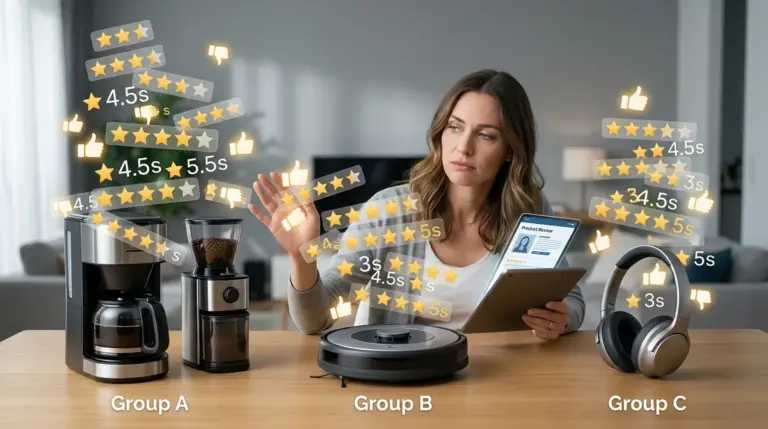
For a performance marketer or a site owner, the difference between a review that converts and one that is ignored lies in the perception of authenticity. Users have developed a sophisticated "filter" for fake or incentivized feedback. When a potential customer lands on a product page or a local listing, they aren't just looking for high ratings; they are looking for reasons to believe the rating is earned. Trust is not a binary state but a cumulative effect of specific data points, including recency, volume, and the presence of critical feedback.
The Conversion Sweet Spot: Why 4.5 Beats 5.0
Data consistently shows that a perfect 5.0 star rating can actually depress conversion rates compared to a 4.2 or 4.7. To a savvy consumer, perfection signals manipulation. It suggests that the brand has either suppressed negative feedback or purchased a "clean" set of reviews. Trustworthiness increases when a profile shows a natural distribution of ratings.
Best for: Brands aiming to build long-term authority rather than short-term hype.
The Role of Negative Feedback in Establishing Credibility
Negative reviews provide the necessary contrast that makes positive reviews believable. When a user sees a 3-star review complaining about a specific shipping delay or a minor UI quirk, it validates the 5-star reviews praising the core functionality. It proves the review section is a transparent record of customer experience rather than a curated marketing brochure. For agencies, advising clients to leave polite, constructive responses to negative reviews is more effective for SEO and trust than attempting to have those reviews removed. Understanding what people really mean when they leave a five-star review can help businesses leverage feedback effectively.
Verification Markers and Third-Party Validation
The source of the review dictates its weight. An anonymous comment on a proprietary website carries almost no authority because the site owner controls the database. Trust is built through "Verified Purchase" badges and third-party platform integration. These markers confirm that a financial transaction occurred before the feedback was solicited.
- Verified Buyer Badges: These confirm the reviewer actually spent money, filtering out competitors or "drive-by" commenters.
- Social Proof Integration: Linking a review to a LinkedIn profile or a Facebook account reduces the likelihood of bot-generated content.
- Third-Party Aggregators: Platforms that prevent companies from deleting negative entries (like G2, Capterra, or Trustpilot) are viewed with higher confidence than internal testimonials.
Warning: Avoid incentivizing reviews with direct payments or high-value gifts. Modern search algorithms and consumer protection agencies are increasingly adept at identifying "review gating," which can lead to manual penalties or legal scrutiny.
Recency and the Decay of Social Proof
A review has a half-life. A glowing testimonial from 2021 is largely irrelevant for a SaaS product that has undergone six major updates since then. For local SEO, recency is a primary ranking factor. If the most recent review is six months old, the consumer assumes the business is either stagnant or declining in quality.
To maintain trust, businesses must implement a consistent review acquisition strategy. This doesn't mean a sudden burst of 50 reviews in one week—which triggers spam filters—but a steady "drip" of feedback that matches the actual transaction volume of the business.
Semantic Specificity and Review Depth
Vague praise is the hallmark of a low-effort or fake review. Phrases like "Great product!" or "Highly recommend!" provide no utility to the buyer. Trustworthy reviews are characterized by semantic specificity—they mention specific features, use cases, or pain points.
Example of high-trust content: "The API documentation was clear, but we struggled with the OAuth2 implementation for the first two hours until we found the specific sample code in the footer."
This level of detail is difficult to fake at scale. It provides "information gain" for the reader, answering specific questions about the product's real-world application. From an SEO perspective, these long-tail keywords within reviews help the page rank for specific "problem/solution" queries.
Visual Evidence and User-Submitted Media
In the e-commerce and hospitality sectors, user-generated photos are the ultimate trust signal. A professional studio shot of a hotel room is marketing; a grainy smartphone photo of the same room taken by a guest is reality. When reviews include photos or videos, they spend significantly more time on the page. This "dwell time" signals to search engines that the content is valuable, while simultaneously lowering the buyer's perceived risk.
The Impact of Brand Responsiveness
Trust is a two-way street. A review section where the brand is silent feels like a graveyard. When a brand responds to both positive and negative feedback, it demonstrates that there is a human element behind the business. However, the response must be specific. Canned, "Thank you for your feedback" templates can actually damage trust by appearing robotic. A trustworthy response addresses the specific points raised in the review, providing a resolution or additional context.
Optimizing Your Review Strategy for Maximum Trust
To move beyond simple star ratings and build a high-trust review profile, focus on these three operational changes:
First, audit your current feedback loop. Are you only asking your happiest customers for reviews? This creates an artificial "5.0" wall that many users will find suspicious. Instead, automate your review requests to go out to every customer after a specific milestone, such as 30 days of product use or a completed service call.
Second, prioritize platforms that offer "Verified" status. For B2B, this means focusing on G2 or Gartner Peer Insights. For B2C, it means ensuring your Shopify or Amazon reviews are tied to actual orders. If you are a local service provider, Google Business Profile remains the gold standard, but only if the reviews contain descriptive text rather than just stars.
Third, leverage user-generated content (UGC) in your own marketing. When you take a specific, detailed review and feature it on a landing page—complete with the reviewer's name and a link to the original source—you bridge the gap between "marketing copy" and "customer truth."
Frequently Asked Questions
How many reviews do I need before a product feels trustworthy?
While there is no hard limit, most consumers look for a minimum of 10 to 20 recent reviews to establish a baseline. However, for high-ticket items ($500+), buyers often require 50 or more reviews to feel confident in the purchase.
Do "incentivized" reviews (reviews for a discount) hurt my SEO?
Search engines generally prefer organic feedback. While not a direct ranking penalty in all cases, platforms like Google and Amazon have strict policies against undisclosed incentives. If a review is incentivized, it must be labeled as such, or you risk having the entire profile suspended.
Should I delete negative reviews if they are unfair?
Unless a review violates platform terms of service (e.g., profanity, hate speech, or proven falsehoods from someone who was never a customer), you should not delete it. An "unfair" review is an opportunity to showcase your customer service. A professional, fact-based response often does more for your brand than the negative review does against it.