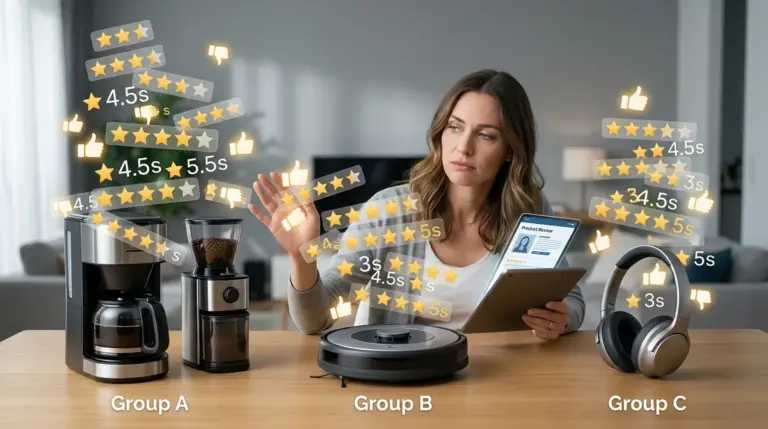
A five-star review is rarely a simple statement of perfection. In the current reputation economy, the maximum rating serves as a complex signal that ranges from genuine advocacy to a polite "transaction complete" notification. For SEO professionals and business owners, the challenge lies in decoding the intent behind the stars to determine which customers are likely to become repeat buyers and which are simply following a social script.
When a customer selects five stars, they are often signaling that the friction of the transaction was low enough to be invisible. However, the commercial value of that review depends entirely on whether the customer felt a personal connection to the brand or merely felt that the product met the bare minimum of its advertised promise. Understanding these nuances allows marketing teams to segment their audience more effectively and refine their conversion rate optimization (CRO) strategies.
The Psychology of the Maximum Rating
The digital marketplace has conditioned consumers to view anything less than five stars as a failure. This "rating inflation" means that a five-star review often represents a baseline of satisfaction rather than an exceptional experience. To understand what a reviewer really means, you must look past the icon and into the syntax of their feedback.
The "Everything Went Fine" Baseline
This is the most common type of five-star review. The customer received the item on time, it worked as expected, and no major issues occurred. Best for: Building volume and maintaining a high average rating. These reviews are often short, using phrases like "Good product" or "Fast shipping." While helpful for social proof, they offer little in the way of brand-building material because they lack emotional resonance.
The "Above and Beyond" Outlier
These reviews are characterized by specific narratives. The customer mentions a specific employee by name, describes a problem that was solved with empathy, or notes a feature that exceeded their technical requirements. Best for: Identifying unique selling points (USPs) and generating high-converting testimonials. These are the reviews that actually move the needle for prospective buyers who are on the fence.
Distinguishing Between Transactional and Relational Reviews
A transactional five-star review is a receipt. A relational five-star review is a recommendation. Distinguishing between the two is critical for lifetime value (LTV) projections. Transactional reviewers are price-sensitive; they gave you five stars because you were the cheapest or fastest option that day. If a competitor offers a lower price tomorrow, they will leave. Relational reviewers have developed an affinity for your brand voice or service model.
- Transactional Indicators: Focus on price, shipping speed, and packaging.
- Relational Indicators: Focus on brand values, ease of use, and "feeling" taken care of.
- Conversion Impact: Relational reviews have a 3x higher impact on secondary purchases compared to transactional ones.
Warning: Beware of "silent" five-star reviews that contain no text. While they boost your aggregate score, search engines and savvy consumers increasingly prioritize reviews with descriptive content. A high volume of star-only ratings can sometimes trigger skepticism regarding the authenticity of your profile.
Why a Perfect 5.0 Rating Often Inhibits Conversion
Counterintuitively, a perfect 5.0 rating can be a conversion killer. Data from the Spiegel Research Center indicates that purchase likelihood peaks when a product's average star rating is between 4.2 and 4.7. Once a rating hits a perfect 5.0, consumers often perceive the score as "too good to be true" or suspect that negative reviews have been suppressed.
When people leave a five-star review for a 5.0-rated business, they are inadvertently contributing to a "trust wall." Prospective buyers look for the "messy middle"—the four-star reviews that mention a minor flaw but still recommend the product. This creates a sense of realism. If your profile is nothing but five-star ratings, you may need to encourage more detailed, honest feedback to provide the balance that modern skeptical shoppers require.
Identifying High-Value Keywords in Five-Star Feedback
For SEO purposes, the text within a five-star review is a goldmine for long-tail keyword research. When customers describe why they are happy, they use the exact language that future customers will type into search engines. If multiple five-star reviewers mention that a software tool is "the best alternative to [Competitor Name]," that is a direct cue for your content strategy.
Analyze your reviews for "intent-heavy" language. Phrases like "solved my problem with," "easy to integrate," or "worth the investment" are high-converting signals. These phrases should be lifted directly from reviews and placed into your H2 headings, meta descriptions, and PPC ad copy. You aren't just guessing what customers want; you are mirroring the language they have already used to praise you.
Extracting Marketing Assets from Perfect Ratings
A five-star review should never sit idle on a third-party platform. To maximize the commercial utility of a perfect rating, you must treat it as raw material for your marketing funnel. This involves more than just a "Testimonials" page. Use these reviews to address specific objections in the buyer's journey.
Best for: Cart abandonment emails and checkout pages. If a reviewer mentions that the "setup was surprisingly easy," that specific quote should be placed near the "Buy Now" button to alleviate the technical anxiety of new users. This targeted use of five-star feedback is significantly more effective than a generic sidebar of praise.
Auditing Your Review Profile for Authenticity
To truly understand what your customers mean, you must regularly audit the quality of your five-star feedback. Look for patterns in the timing and phrasing of reviews. If you see a cluster of five-star ratings that all use similar, generic language, it may indicate a flaw in your review solicitation process—or worse, it may look like a coordinated bot attack to search engine algorithms. This can contribute to review fatigue is a growing concern, making consumers less likely to trust any feedback.
Authentic five-star reviews vary in length, tone, and focus. Some will be enthusiastic and exclamation-heavy, while others will be clinical and professional. This diversity is what builds trust. If your audit reveals that your five-star reviews are starting to sound identical, it is time to change your post-purchase survey questions to elicit more specific, personal responses.
Leveraging Five-Star Data for Growth
The goal of monitoring five-star reviews is not just to feel good about your business; it is to identify the "Success Path" your best customers are taking. When a customer leaves a top rating, they are telling you that your current process worked for their specific use case. By aggregating the data from these reviews, you can identify which features are your actual "hero" features and which ones are underperforming.
If 80% of your five-star reviews for a SaaS product mention the "customer support response time" but only 5% mention the "advanced reporting dashboard," you have a clear indicator of where your real value lies in the eyes of the consumer. This insight should dictate your development roadmap and your advertising spend.
Common Questions About Five-Star Review Intent
Does a five-star review always mean the customer will return?
No. Many five-star reviews are "transactional," meaning the customer was satisfied with that specific interaction but feels no long-term loyalty. To drive repeat business, you must convert transactional satisfaction into a relational connection through follow-up engagement and personalized offers.
Why do some five-star reviews contain negative comments?
This is known as a "constructive five-star." The customer loves the product overall and wants the business to succeed, so they provide a high rating to protect the business's average while using the text to suggest improvements. These are often your most valuable customers because they are acting as unpaid consultants.
How should I respond to a five-star review with no text?
A simple, professional "Thank you for the five-star rating, [Name]! We’re glad you had a great experience" is sufficient. While textless reviews offer less SEO value, acknowledging them shows that you are attentive to all customer feedback, which encourages future customers to leave more detailed reviews.
Can too many five-star reviews hurt my SEO?
Not directly, but a lack of diversity in your rating profile can lead to lower click-through rates (CTR) from search engine results pages (SERPs). Consumers are trained to look for authenticity. If a profile looks manipulated—such as having 500 five-star reviews and zero four- or three-star reviews—users may bounce, which indirectly harms your search rankings.