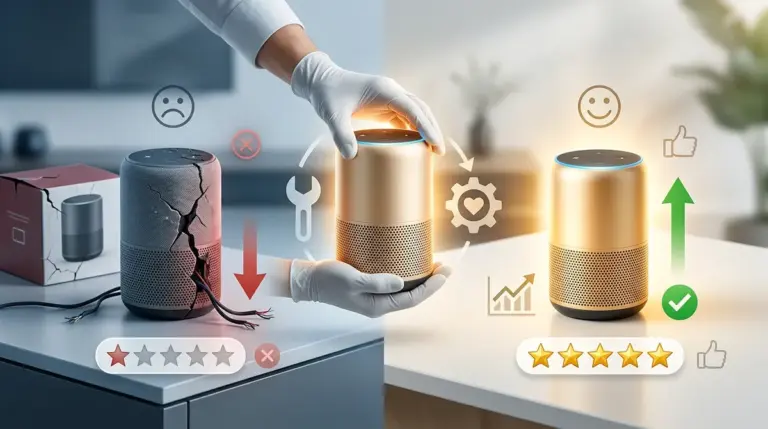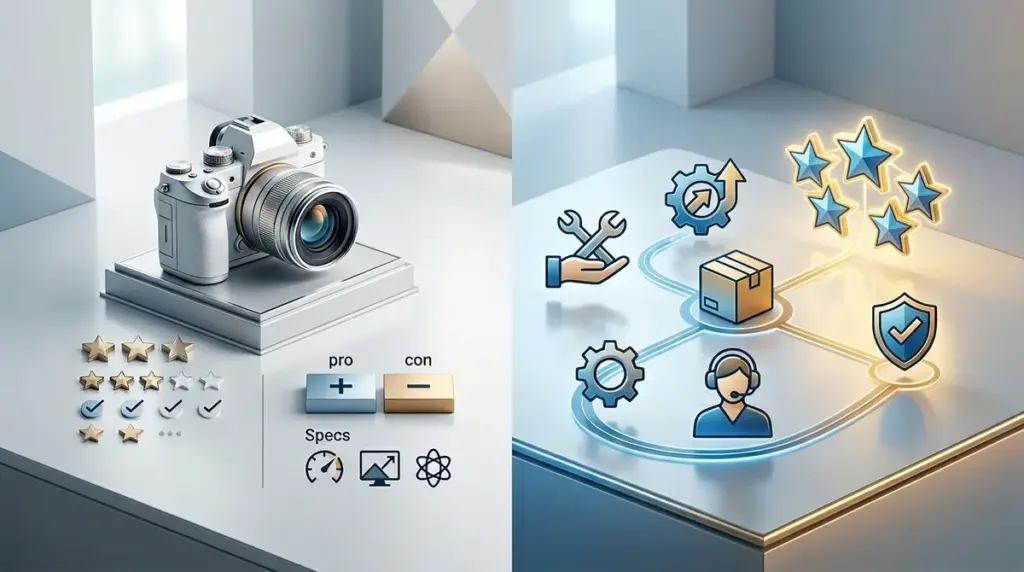
A defective product is a logistical inconvenience; a failed service is a strategic liability. When a physical item fails to meet expectations, the remedy is usually a straightforward refund or replacement. However, when a service provider—be it an SEO agency, a cloud hosting firm, or a legal consultancy—underperforms, the loss extends far beyond the invoice amount. You lose time, internal momentum, and often, market position. This fundamental difference in risk profile is why service reviews carry significantly more weight for professionals and business owners than standard product ratings.
The Irreversibility of Service Spend
The primary differentiator between products and services is the "returnability" of the investment. If a piece of hardware does not perform to its technical specifications, the consumer protection framework is robust. Services, however, are consumed as they are produced. You cannot "return" three months of stagnant organic growth caused by an incompetent agency or the downtime resulting from a poorly managed server migration.
Best for: Risk assessment and long-term budgetary planning.
Service reviews provide a window into the operational reliability of a partner. While a product review might focus on whether a button feels tactile, a service review focuses on whether a team hits deadlines and how they handle crisis management. For a marketer or business owner, the latter is a predictor of business continuity.
Quantifying the Human Variable
Products are manufactured to achieve consistency through automation and quality control. Services are performed by people, making them inherently variable. A service review is not just a critique of a brand; it is an audit of that brand’s hiring standards, internal training, and employee retention. High turnover within an agency directly impacts the quality of the service you receive, a nuance that product reviews never have to address.
- Account Management Consistency: Does the reviewer mention frequent changes in their point of contact?
- Technical Depth: Do the reviews suggest the frontline staff possess the expertise promised during the sales cycle?
- Responsiveness: What is the recorded lag time between a critical issue and a resolution?
When reading service reviews, look for mentions of specific names or roles. This indicates a level of personal investment and accountability that is absent in the anonymous transaction of buying a physical good.
Warning: Be wary of service reviews that focus exclusively on the sales process. The most valuable feedback comes from clients who have been under contract for at least six months. Early-stage praise often reflects the "honeymoon period" rather than the provider’s ability to sustain performance during the inevitable plateaus of a long-term project.
Operational Transparency vs. Feature Lists
Product reviews often devolve into a comparison of feature sets—megapixels, battery life, or processing speed. Service reviews, conversely, reveal the "how" rather than the "what." A service might technically offer "comprehensive reporting," but a review will tell you if those reports are automated junk or manual, insight-driven documents that actually inform your strategy.
For SEO professionals and publishers, this distinction is vital. You aren't just buying a "link building service"; you are buying a process. Service reviews highlight whether that process is transparent or a "black box" that could potentially put your site at risk of manual actions. A product review won't tell you if a company’s ethics align with yours, but a detailed service testimonial often will.
The Delta Between Sales Promises and Operational Reality
In the B2B sector, the gap between what a sales deck promises and what the fulfillment team delivers is where most professional frustrations live. Product reviews are often unnecessary for verifying basic specs—you can see the dimensions and weight on the box. Service reviews are the only way to verify the "soft" specs of a partnership.
SLA Adherence and Conflict Resolution
Service Level Agreements (SLAs) are often written in dense legal language that favors the provider. Reviews act as the "common law" of the industry, showing how those agreements are interpreted in the real world. Does the provider hide behind fine print when things go wrong, or do they take ownership? This information is never found on a pricing page, yet it is the most critical factor in a long-term commercial relationship.
The Cost of Integration and Onboarding
A product is usually ready to use out of the box. A service requires a period of "bedding in." Service reviews frequently detail the onboarding experience—specifically, how much "heavy lifting" is required from your internal team. If multiple reviewers mention that onboarding took twice as long as promised, you can factor that delay into your projected ROI.
Auditing Your Service Procurement Process
To move beyond surface-level evaluations, your procurement process should treat service reviews as primary data points rather than secondary social proof. When evaluating a new partner, categorize reviews by "Critical Incidents." Look for how the service provider behaved when a project went off the rails. A provider with a 4.8-star rating who handled a disaster with transparency is often a better choice than a 5.0-star provider who has never been tested.
Actionable Step: When vetting a service, specifically ask for references from "former" clients, not just current ones. Then, cross-reference their feedback with public reviews to see if the provider has addressed historical weaknesses in their delivery model.
Frequently Asked Questions
How can I tell if a service review is fake?
Look for specific industry terminology. Genuine service reviews usually mention specific challenges, such as "API integration hurdles" or "quarterly business review (QBR) depth." Vague, overly enthusiastic praise that lacks technical context is a common red flag for manufactured feedback.
Why do some high-quality services have lower ratings than mediocre products?
Services are subject to "expectation mismatch." A client might hire an SEO agency expecting overnight results despite being told otherwise. Products have fixed functions, making expectations easier to manage. Always read the "why" behind a negative service review to see if the fault lies with the provider or the client's unrealistic goals.
Should I prioritize recent reviews or long-term history?
For services, prioritize reviews from the last 6 to 12 months. Service quality is highly dependent on current leadership and staff. A company that was excellent three years ago may have undergone a merger or talent drain that significantly altered their current delivery standards.
What is the most important metric in a service review?
Consistency. If multiple reviewers over a two-year span mention the same strength (e.g., "proactive communication"), it is likely a core part of the company's culture. If the feedback is wildly inconsistent, it suggests your experience will be a "luck of the draw" based on which account manager you are assigned.