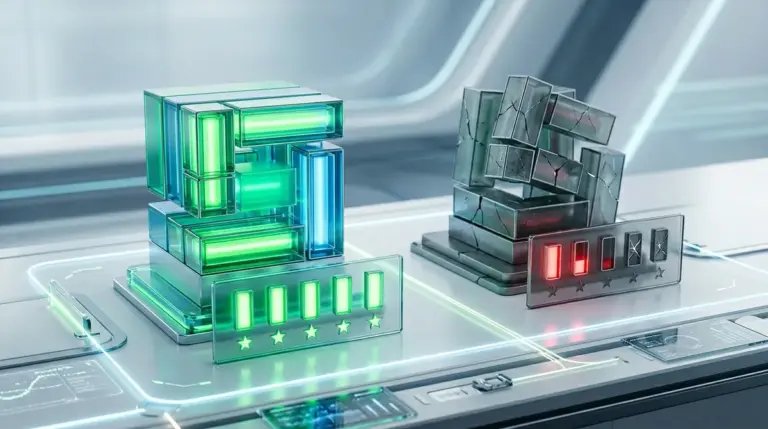
Customer service recovery is not a damage control exercise; it is a high-yield conversion strategy. When a service failure occurs, the immediate reaction for most businesses is to minimize the fallout. However, data suggests that a perfectly executed recovery can result in a customer who is more loyal than one who never experienced a problem at all. This phenomenon, known as the Service Recovery Paradox, directly dictates the trajectory of a brand’s public review profile. For SEO professionals and agency owners, mastering this process is the difference between a stagnant 3.8-star rating and a dominant 4.7-star presence that drives organic clicks. For SEO professionals and agency owners, mastering this process is the difference between a stagnant 3.8-star rating and a reputation that shows how service reviews often matter more than product reviews.
The Service Recovery Paradox as a Review Strategy
The Service Recovery Paradox (SRP) occurs when a customer's post-failure satisfaction exceeds their pre-failure satisfaction. In the context of online reviews, this manifests as the "updated review." A customer who initially posts a scathing one-star review but later updates it to a five-star rating after a successful intervention provides more social proof than a standard five-star review. These "redemption stories" signal to prospective buyers that the company is accountable, responsive, and committed to quality, which are often higher-weighted psychological triggers than simple competence. These redemption stories signal to prospective buyers that the company is accountable, responsive, and committed to quality, which are often higher-weighted psychological triggers than simple competence, directly informing their perception of brand reliability.
Converting Negative Sentiment into Public Advocacy
The goal of service recovery is to move the customer through three distinct phases: venting, resolution, and advocacy. Best for: Businesses in high-friction industries like SaaS, logistics, or hospitality where minor technical or operational errors are inevitable. When a customer vents via a review, they are providing a roadmap for what they value. By addressing the specific pain point—whether it was a billing error, a shipping delay, or a software bug—and providing a tangible "make-good," you create the moral obligation for the customer to update their feedback. This transition from a detractor to a promoter is the most cost-effective way to improve a local SEO profile or a Trustpilot score.
Technical Steps to Review Rectification
Recovery must be systematic. It cannot rely on the whims of a support agent. To impact future reviews, the recovery process must follow a strict protocol that prioritizes speed and transparency.
- Immediate Acknowledgment: Respond to negative reviews within 2 hours. This prevents the sentiment from hardening and stops the "echo chamber" effect where other disgruntled customers pile on.
- Internal Root Cause Analysis: Before promising a fix, identify if the failure was a one-off human error or a systemic process failure. Promising a fix that fails a second time is the fastest way to earn a permanent one-star rating.
- The "Plus-One" Compensation: Do not just fix the problem. Provide the fix plus a value-add (e.g., a month of free service, a discount code, or an expedited replacement). This over-delivery triggers the Service Recovery Paradox.
- The Explicit Request: Once the customer confirms satisfaction, explicitly ask them to update their review. Most customers are willing to do this if the resolution was painless, but few will do it unprompted.
Warning: Never offer compensation in exchange for a review update on public forums. This violates the Terms of Service for Google Business Profile and Yelp, which can lead to "Review Filter" penalties or total account suspension. Keep the compensation discussion private (via email or phone) and the review request separate from the offer.
Operationalizing the Response Framework
To ensure consistency, agencies and marketing managers must deploy a response framework that removes emotional variance. When a negative review hits, the responder should not be defensive. Instead, they should treat the review as a free diagnostic report.
The Role of Response Latency
Latency is the primary killer of recovery. A study of consumer behavior indicates that 53% of customers expect a business to respond to their negative review within a week. However, for high-intent industries, that window is closer to 24 hours. If a response arrives three weeks later, the customer has already moved on to a competitor, and the negative review remains a permanent fixture of your search results. High-performing brands use automated alerts to trigger a manual human response within the first business day.
Closing the Feedback Loop
Future reviews are shaped by the changes you make today. If three different customers complain about a confusing checkout interface, and you fix it, you have effectively prevented dozens of future negative reviews. Service recovery is only half of the equation; the other half is operational iteration. Documenting every "recovered" customer allows you to identify patterns that, if ignored, would continue to drag down your aggregate rating regardless of how good your support team is.
Measuring the ROI of Recovery Efforts
The financial impact of recovery is measurable through three key metrics: Review Velocity, Average Rating Increase, and Customer Lifetime Value (LTV). A recovered customer typically has a higher LTV because they have seen the brand's "worst-case scenario" and were satisfied with the outcome, reducing their perceived risk for future purchases.
Metric 1: Review Update Rate. Track the percentage of one-star or two-star reviews that are upgraded to four or five stars following a recovery intervention. A healthy target is 15-20%.
Metric 2: Sentiment Shift. Use sentiment analysis tools to track the language used in reviews over time. Are the mentions of "frustrating" or "broken" being replaced by "helpful" and "resolved"?
Metric 3: Referral Traffic. Monitor if updated reviews lead to higher click-through rates (CTR) from search engine results pages (SERPs). A review that says "Had an issue but they fixed it immediately" often converts better than a generic "Great service" review.
Building a Resilient Feedback Loop
To turn service recovery into a competitive advantage, stop viewing negative reviews as an attack and start viewing them as an opportunity for public re-branding. Every negative comment is a stage. How you perform on that stage determines whether the next 100 people who read that review will trust you or skip you. Implement a "Recovery First" policy where support teams are empowered to issue refunds or credits without managerial approval up to a certain dollar amount. This autonomy reduces response latency and ensures that the recovery happens while the customer is still engaged. Finally, audit your review profile monthly to ensure that every negative interaction has a professional, resolution-oriented public response. This creates a "wall of accountability" that builds long-term brand equity.
Frequently Asked Questions
Does responding to every review actually help SEO?
Yes. Google has confirmed that responding to reviews improves your local SEO visibility. It signals that the business is active and managed, which increases the "prominence" score in the local search algorithm.
Should I ask a customer to delete a negative review instead of updating it?
No. An updated review that shows the transition from a negative experience to a positive one is more valuable for social proof than a deleted review. It demonstrates that your business is capable of solving problems, which builds more trust with skeptical prospects.
What is the best way to handle a "fake" negative review?
Do not attempt a standard service recovery. Instead, respond professionally stating that you have no record of a customer with their name or order details, and then flag the review for a TOS violation with the platform. Engaging in a recovery dialogue with a bad-faith actor is counterproductive.