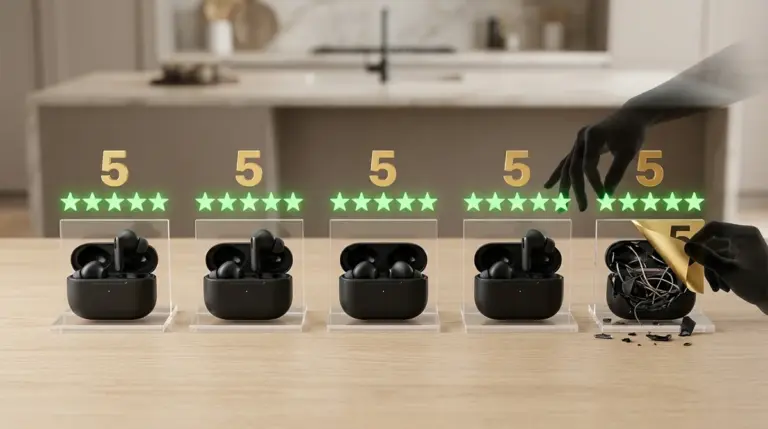


Procurement teams and marketing directors frequently mistake a high volume of positive reviews for a guarantee of technical competence. While a 4.9-star rating on a B2B review platform indicates that an agency or software provider is generally pleasant to work with and meets basic contractual obligations, it rarely accounts for the specific technical depth required for complex, high-stakes projects. Reputation is often a trailing indicator of historical performance, whereas experience is a leading indicator of future success in specific environments.
The danger lies in the "Halo Effect," where a provider's excellence in one area—such as high-level strategy or client communication—masks significant gaps in execution for specialized tasks like international SEO, headless CMS migrations, or large-scale data architecture. To avoid costly hiring mistakes, buyers must learn to look past the aggregate score and interrogate the specific mechanics of a provider's past wins.
The Delta Between Customer Service and Technical Proficiency
A significant portion of positive B2B reviews are weighted toward the "soft" side of the engagement. Clients often leave high ratings because the account manager was responsive, the reports were visually appealing, and the meetings ran on time. While these are necessary for a functional partnership, they do not correlate with the ability to diagnose a rendering issue in a React-based site or recover a domain after a devastating core update.
When reputation is built on service rather than specialized output, the "experience gap" becomes apparent the moment a project moves outside of standard operating procedures. A generalist agency with 500 five-star reviews for local SEO may have zero experience managing the crawl budget of a 2-million-page e-commerce site. Relying on their reputation in the former category to justify a hire in the latter is a common path to project failure.
Deconstructing the Case Study Trap
Case studies are the primary currency of reputation, yet they are often curated to show "up and to the right" graphs without explaining the variables that drove those results. A "good reputation" is often built on a handful of legacy wins that may no longer be relevant to the current digital landscape or the specific team members currently employed at the firm.
Look for: Specificity in the "How" rather than the "What." A reputable agency might claim they increased organic traffic by 40% for a fintech client. A truly experienced agency will explain that they achieved this by restructuring the internal linking of the knowledge base to prioritize high-intent clusters and fixing a specific canonicalization error that was causing duplicate content across subdomains. If the provider cannot explain the technical levers they pulled, they are likely coasting on a reputation they didn't technically earn.
Warning: Beware of "Agency Drift." This occurs when the senior experts who built the firm's reputation have moved into management or left the company, leaving junior staff to execute on the legacy of their predecessors. Always ask for the specific bios of the people who will be touching your account, not just the names on the "About" page.
The Vertical Blind Spot
Experience is not a universal commodity; it is highly verticalized. A provider's reputation in the SaaS space rarely translates to the legal or medical sectors, where regulatory compliance and YMYL (Your Money Your Life) signals are paramount. A high-rated content agency might produce excellent blog posts for a lifestyle brand but fail miserably when tasked with writing authoritative medical content that requires strict adherence to E-E-A-T guidelines.
To bridge this gap, procurement must demand evidence of performance within their specific niche. This includes:
- Regulatory Knowledge: Does the provider understand the specific legal constraints of your industry?
- Technical Stack Familiarity: Have they worked with your specific CMS, CRM, or data warehouse before?
- Competitive Benchmarking: Can they name your top three competitors and explain why they are currently outperforming you?
- KPI Alignment: Do they prioritize the metrics that actually drive your business, or are they stuck on "vanity metrics" like raw traffic or social impressions?
Identifying the "A-Team" Bait and Switch
Large agencies often use their most experienced directors to win the pitch, leveraging their personal reputations to close the deal. Once the contract is signed, the work is delegated to junior associates who lack the experience to navigate complex hurdles. This creates a gap between the "perceived" experience of the agency and the "actual" experience applied to your project.
To mitigate this, include a clause in your Statement of Work (SOW) that specifies the minimum years of experience for the lead strategist and the technical execution team. Reputation belongs to the individual, not just the brand. If the brand has a great reputation but the team assigned to you has an average of 18 months in the industry, you are paying for an experience gap that will eventually manifest in poor results.
A Framework for Technical Verification
Instead of asking for "references," which will always be cherry-picked, ask for a "blind technical walkthrough." Ask the provider to walk you through a past project that failed or underperformed and explain why it happened and what they learned. A provider with genuine experience will be able to provide a nuanced, technical post-mortem. A provider relying solely on reputation will likely pivot back to generic marketing speak or blame the client's internal team.
Furthermore, request a "trial audit" or a paid discovery phase. This allows you to see their technical depth in action before committing to a long-term contract. If their audit consists of automated exports from standard SEO tools without manual interpretation, they lack the experience to provide bespoke value.
Operationalizing the Vetting Process
Moving from reputation-based hiring to experience-based hiring requires a shift in how you evaluate proposals. Stop looking at the aggregate star rating and start looking at the granularity of their technical responses. If a provider cannot explain their methodology for handling a site migration or a data integration in detail, their reputation is likely a facade for a standardized, low-touch service model.
Focus on these three pillars during your final evaluation:
1. Direct Relevance: Have they solved this exact problem in this exact industry within the last 12 months?
2. Personnel Continuity: Will the people who wrote the proposal be the ones doing the work?
3. Technical Transparency: Are they willing to show the "raw data" behind their success stories?
Frequently Asked Questions
How can I tell if an agency is using junior staff for my project?
Ask for a monthly breakdown of hours by role. If the majority of the execution hours are billed to "Account Coordinators" or "Junior Specialists" while the "Strategists" only appear on one call a month, you are likely being serviced by a junior team. You should also ask to meet the specific technical leads during the sales process.
Why do some high-rated tools fail to deliver results?
Software reputation is often based on UI/UX and ease of use. However, a tool can be easy to use but lacks the depth of data or the specific features required for enterprise-level analysis. Always test the tool against your largest data sets or most complex use cases during the trial period to ensure it doesn't break at scale.
Is niche experience more important than general SEO reputation?
In 90% of cases, yes. The nuances of different industries—such as the way Google treats "YMYL" sites versus "Entertainment" sites—are so significant that a generalist reputation is often insufficient. An agency that specializes in your specific niche will already have the "playbook" for your competitors, saving you months of trial and error.
What is the most common "hidden" experience gap?
The most common gap is the transition from strategy to execution. Many consultants have a great reputation for giving advice but lack the in-house engineering or copywriting resources to actually implement that advice. This leaves the client with a "reputable" roadmap that they cannot actually execute.