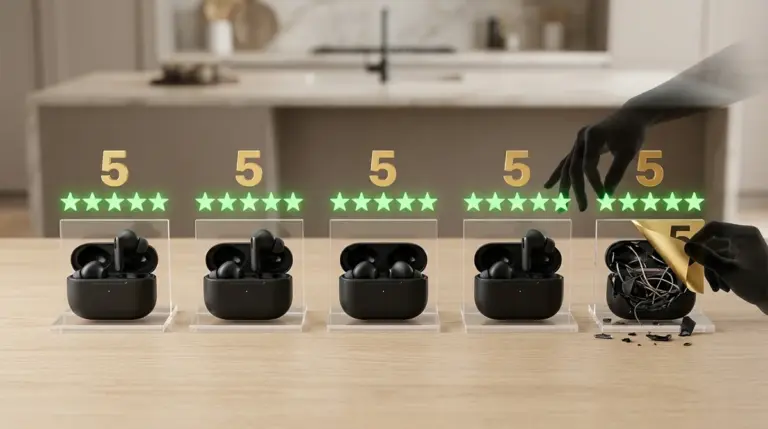


Brand identity was once a top-down exercise in creative direction. Marketing departments would select a color palette, draft a mission statement, and push a curated narrative to the public. In the current search and social ecosystem, that model has inverted. Brand identity is now an emergent property of aggregated customer feedback. When specific themes repeat across hundreds of reviews on platforms like Trustpilot, G2, or Google Business Profiles, they solidify into a "perceived truth" that overrides any internal marketing copy. This shift highlights how reviews shape brand perception, making customer voice the primary driver of identity.
For SEO professionals and brand managers, the challenge is no longer just getting more reviews; it is managing the thematic clusters that define the brand in the eyes of both users and search engine algorithms. Google’s emphasis on E-E-A-T (Experience, Expertise, Authoritativeness, and Trustworthiness) means that recurring sentiment patterns are treated as signals of real-world performance. If your reviews consistently mention "hidden fees," that becomes a core attribute of your brand entity, regardless of your site’s "Transparent Pricing" page.
The Mechanics of Thematic Solidification
Thematic solidification occurs when independent customers, without prompting, use similar vocabulary to describe a specific aspect of their experience. This isn't just about star ratings; it’s about the linguistic density of specific nouns and adjectives. Search engines use Natural Language Processing (NLP) to parse these reviews and associate specific entities with your brand.
Best for: Marketing directors looking to align their value proposition with actual customer perception.
When a theme reaches a critical mass—typically appearing in 15% or more of total reviews—it enters the "Identity Zone." At this stage, the theme begins to influence conversion rates more than the product description itself. If a SaaS company is consistently praised for "intuitive onboarding," that phrase will start appearing in organic search snippets, effectively writing the brand's meta descriptions for them.
Quantifying Sentiment Patterns in Customer Feedback
To manage brand identity, you must first quantify it. Raw review data is messy, but patterns emerge when you categorize feedback into functional buckets: Product Quality, Customer Support, Pricing, and Delivery/Logistics. A brand with a 4.5-star average may still have a "Support Crisis" if the bulk of its 1-star and 2-star reviews specifically target response times.
- Frequency: How often does a specific keyword (e.g., "durable," "slow," "buggy") appear per 100 reviews?
- Velocity: Is the theme increasing or decreasing in frequency over the last 90 days?
- Sentiment Weight: Does the theme appear primarily in high-rating or low-rating reviews?
- Contextual Association: What other terms are frequently mentioned alongside the core theme?
By analyzing these metrics, agencies can identify "Brand Anchors"—the three to five recurring themes that define the company. If these anchors align with the intended marketing message, the brand has "Identity Symmetry." If they clash, the brand is suffering from "Identity Friction," which typically leads to higher customer acquisition costs (CAC) as marketing must work harder to overcome negative organic sentiment.
Distinguishing Between Outliers and Systemic Trends
Not every negative review is a threat to brand identity. A single disgruntled customer complaining about a specific edge case is an outlier. However, when five different customers in a single month mention that the "cancelation process is difficult," you are looking at a systemic trend. Systemic trends are what search engines use to categorize your business. If "difficult cancelation" becomes a recurring theme, you may find your brand appearing in "is [Brand] a scam?" search queries, which are devastating for long-term SEO health.
Pro Tip: Use review management tools to set alerts for "identity-shifting" keywords. If your brand is positioned as a luxury service, keywords like "cheap feel" or "budget" should trigger an immediate operational audit to prevent those themes from becoming permanent brand attributes. This proactive approach helps prevent negative perceptions from solidifying, addressing how customer feedback can mask issues that need immediate attention.
Turning Recurring Praise into Conversion Copy
When positive themes repeat, they provide a roadmap for high-converting copy. Instead of guessing what customers value, look at the specific phrases they use to defend your brand. If customers repeatedly mention that a software tool "saved them six hours a week," that exact phrasing should be moved to the H1 of your landing page. This creates a feedback loop where the marketing confirms the reviews, and the reviews validate the marketing.
Best for: Copywriters and CRO specialists who need data-backed social proof.
This alignment is particularly effective for "Bottom of Funnel" (BOFU) content. When a prospect is comparing two agencies, they aren't looking at the service lists; they are looking for the "Identity Anchor" that matches their pain point. If Agency A is known for "technical depth" and Agency B is known for "fast communication," the prospect will choose based on which theme they value more. You cannot "fake" these identities; they must be earned through consistent operational performance that triggers the reviews in the first place.
Mitigating Damage from Negative Identity Anchors
Once a negative theme becomes part of your brand identity, simply burying it with "fake" positive reviews is ineffective and often violates platform terms of service. The only way to shift a brand identity is through "Thematic Displacement." This requires a two-step process: fixing the operational root cause and then aggressively incentivizing feedback specifically around the *new* improved process.
For example, if a restaurant is known for "long wait times," they must first implement a better booking system. Once the system is live, they should prompt customers specifically to review the "ease of check-in" or "seating speed." Over time, the new, positive theme will dilute the old, negative one in the eyes of the algorithm, eventually displacing it as a primary brand attribute.
Operationalizing Review Data for Brand Realignment
To move from a passive recipient of reviews to an active shaper of brand identity, follow this tactical framework:
1. **Conduct a Theme Audit:** Use an NLP tool or manual tagging to identify the top 10 recurring nouns and adjectives in your last 500 reviews. Compare these to your current brand guidelines.
2. **Identify the Gap:** Where does the customer’s vocabulary differ from the brand’s vocabulary? If you call your product "innovative" but customers call it "reliable," your brand identity is Reliability, not Innovation.
3. **Update Marketing Assets:** Align your website copy, ad headlines, and social media bios with the positive themes found in your reviews. Use the customers' own language to reduce cognitive dissonance during the buyer journey.
4. **Address Negative Clusters:** Identify the top two negative themes and treat them as product or service bugs. Resolve them operationally before attempting to change the narrative.
Actionable Steps for Brand Identity Control
Your brand identity is a live document, updated with every new review. To maintain control, you must treat review platforms as primary marketing channels, not secondary feedback loops. Monitor the "Most Relevant" or "Helpful" reviews on major platforms, as these are the ones that most heavily influence both users and search engines. If the top three reviews for your business highlight a theme you don't want to be associated with, your primary goal should be generating high-quality, detailed reviews that highlight a more desirable theme to push the negative ones off the front page.
Ultimately, brand identity is the sum of your customers' shared experiences. By identifying, quantifying, and responding to repeated themes, you can ensure that the organic narrative surrounding your business aligns with your commercial goals.
Frequently Asked Questions
How many reviews are needed before a theme becomes part of my brand identity?
There is no hard number, but statistical significance usually begins when a theme appears in 10-15% of your total review volume or appears consistently in 3 out of the top 10 "most helpful" reviews. For smaller businesses, as few as 5-10 detailed reviews mentioning the same specific point can set the narrative.
Can I change my brand identity if the current themes are negative?
Yes, through Thematic Displacement. You must first fix the operational issue causing the negative feedback, then actively encourage reviews that highlight the fix. It typically takes 3 to 6 months of consistent positive feedback on a new theme to start shifting the perceived identity in search results.
Do search engines really use review text to understand my brand?
Yes. Google’s patents and search quality evaluator guidelines indicate that the engine uses sentiment analysis and entity extraction from third-party reviews to determine a site's trustworthiness and niche authority. Recurring keywords in reviews can even help your business rank for "unbranded" queries related to those themes.
What is the most important metric for review-based brand identity?
Thematic Consistency. A brand with a 4.2-star rating where everyone agrees on the specific strengths is often more "trusted" by consumers than a 4.8-star brand where the reviews are vague, generic, or contradictory. Specificity breeds credibility.