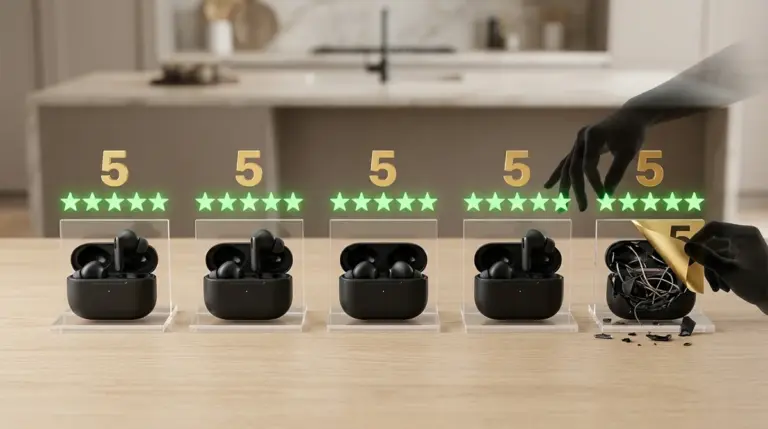


Marketing departments are often incentivized by lead volume and conversion rates, while product teams are measured by stability and feature adoption. When these two functions operate in silos, the result is a "delivery gap"—a space where the customer's expectations, set by high-gloss advertisements, crash into the reality of a functional but perhaps incomplete product. For a business, this isn't just a branding issue; it is a financial drain that manifests as high churn, inflated customer acquisition costs (CAC), and a permanent stain on public review profiles.
The Financial Mechanics of the Experience Gap
When marketing promises outpace the actual customer experience (CX), the business enters a cycle of "leaky bucket" growth. You spend heavily to acquire a user who expects a specific outcome. When that outcome is delayed by a steep learning curve or missing features, the user churns before you reach the break-even point on your CAC. In SaaS and service-based industries, the profit is made in months 12 through 24; if the experience gap causes a departure in month three, the marketing spend was a net loss. This is especially true when the reality of customer experience gaps fails to match what was advertised.
Key Metric: Pay close attention to your "Time to Value" (TTV). If your marketing suggests an "out of the box" solution but the implementation requires three weeks of manual configuration, your TTV is too high to support your marketing claims.
The Erosion of Brand Equity and Review Integrity
In an era where third-party review platforms dictate organic search visibility and trust, a mismatch between promise and delivery is public. A customer who feels "sold a bill of goods" is significantly more likely to leave a detailed, negative review than a customer who is simply lukewarm about a product. These reviews create a "trust tax" for all future marketing efforts. You will find yourself spending more on PPC and social proof campaigns just to counteract the organic warnings left by dissatisfied early adopters.
The "Vaporware" Trap in Growth Stages
Early-stage companies often market features that are still in beta or on the roadmap as if they are fully live. While this might secure a round of funding or a spike in sign-ups, it creates a support nightmare. Your customer success team becomes a "disappointment management" department, spending their time apologizing for missing functionality rather than helping users find value in what actually exists.
Warning: Marketing "future-state" features as "current-state" capabilities is the fastest way to destroy your Net Promoter Score (NPS). If a feature is not in the stable build, it should not be in the primary headline of your landing page.
Symptoms of Over-Promising in Your Funnel
Identifying that your marketing has outrun your CX requires looking at specific data points beyond simple conversion rates. If you see the following patterns, your messaging is likely misaligned with your product reality:
- High Day-30 Churn: Users sign up, explore the tool, realize it doesn't do what the ad promised, and leave immediately.
- Support Ticket Spikes Post-Onboarding: A high volume of tickets asking "How do I do [X]?" where [X] was a major marketing hook but is difficult to find or use.
- Discount Dependency: Sales teams feel they must offer heavy discounts to close deals because the product's perceived value during the demo doesn't match the price point suggested by the marketing.
- Negative Sentiment in "Ease of Use" Ratings: Even if the product works, if the marketing promised "simplicity" and the product is complex, users will rate it poorly.
How to Align Messaging with Reality
Closing the gap requires a structural shift in how marketing and product teams communicate. It is not about making the marketing "worse"; it is about making it more accurate and targeted. When you target the right user with the right expectations, retention climbs, and the cost of support drops.
Audit the "Sales-to-Service" Handover
The moment a lead becomes a customer is the most vulnerable point in the lifecycle. Review your automated welcome emails and onboarding sequences. Do they reinforce the specific promises made in the ad that converted them? If your ad promised "Advanced Data Analytics" but your onboarding only covers "Setting up your Profile," you have created immediate friction.
Implement a Marketing-Product Feedback Loop
Marketing teams should have access to support logs and churn exit surveys. If customers are consistently citing a specific missing feature as their reason for leaving, and that feature is highlighted in your top-performing Facebook ad, that ad needs to be paused or rewritten. Conversely, if users rave about a "hidden" feature that isn't in your marketing, you have found a new, authentic hook.
Operationalizing Honesty for Higher LTV
The most successful brands are those that under-promise and over-deliver. This doesn't mean being modest; it means being specific. Instead of claiming your software is "The All-in-One Solution for Everything," claim it is "The Best Tool for [Specific Task] for [Specific Audience]." This specificity filters out users who would have churned anyway and attracts those who will actually find value in your current build.
Best for: Companies looking to stabilize their churn rate and build a sustainable, review-backed reputation. Authenticity in marketing acts as a filter, ensuring your customer base is comprised of people the product can actually serve.
Executing a Messaging Correction
Correcting an experience gap requires a three-step audit of your current external communications. This is not a one-time fix but a recurring process to ensure that as the product evolves, the marketing remains tethered to the actual user experience.
- Feature Verification: Ensure every "Hero" feature mentioned on your homepage is accessible to all users without a "contact sales" barrier, unless explicitly labeled.
- Documentation Sync: Check that your knowledge base articles actually match the current UI. There is nothing more frustrating for a new user than following a tutorial that references buttons that no longer exist.
- Review Monitoring: Read your 3-star reviews. These are usually the most honest assessments of where the marketing promised a 5-star experience but the product delivered a 3-star reality.
Frequently Asked Questions
Does honest marketing lead to fewer leads?
It may lead to a lower raw volume of leads, but it typically results in higher-quality leads with a much higher conversion-to-paid rate and longer retention. You are essentially trading "noise" for "revenue."
Who is responsible for the experience gap?
Responsibility lies with leadership to ensure that KPIs for Marketing and Product are not in direct conflict. If Marketing is only judged on leads and Product is only judged on release dates, the gap is inevitable.
How do I fix a reputation damaged by over-promising?
The most effective way is through transparent communication and "feature-matching" updates. Acknowledge the feedback in public reviews, explain the steps taken to improve the experience, and ensure that future marketing reflects the current, improved state of the product.
Can I still market features that are "Coming Soon"?
Yes, but they must be clearly labeled as part of a roadmap. Transparency builds trust; presenting a roadmap as a current reality destroys it.