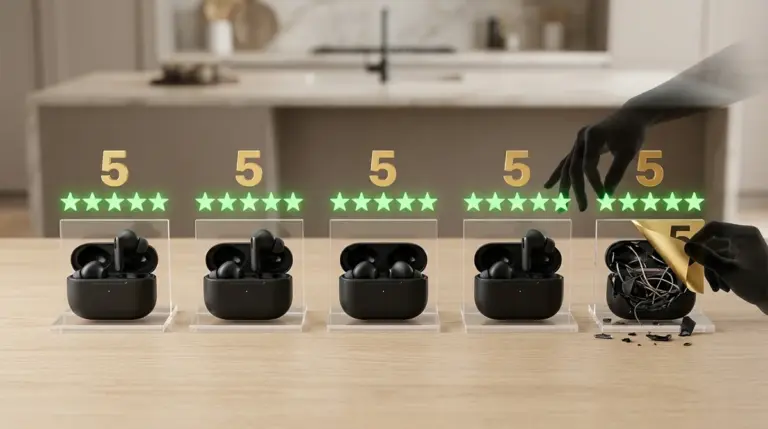


A 4.8-star rating is a vanity metric that masks operational reality. While founders often celebrate a high average, the aggregate score is a lagging indicator that provides zero insight into product-market fit or impending churn. The real intelligence lies in the qualitative data—the specific nouns, verbs, and syntax customers use to describe their experience. When a user writes a three-paragraph review, they are providing a free diagnostic report on your business model, your UI/UX, and your competitive positioning.
For a founder, the goal of reading reviews should not be self-validation. It should be the identification of the "semantic gap"—the distance between how you describe your product and how your customers actually use it. By analyzing the language patterns in reviews, you can uncover high-intent keywords for SEO, identify friction points in the onboarding flow, and steal market share from competitors by addressing the specific grievances their users voice in public forums.
Decoding the Vocabulary of Customer Frustration
Negative reviews are often more valuable than glowing testimonials because they contain the exact vocabulary of friction. When a customer says a tool is "clunky," they are rarely talking about the visual design; they are usually referring to the number of clicks required to achieve a specific outcome. Founders should look for recurring clusters of descriptive language that signal systemic issues.
Best for: Product Managers and Lead Developers looking to prioritize the engineering roadmap based on user-defined pain points rather than internal assumptions.
- Functional Friction: Look for phrases like "I couldn't find," "it took me an hour to," or "I had to contact support for." These indicate a failure in the self-service architecture.
- Value Discrepancy: Phrases like "expensive for what it does" or "missing basic features" suggest that your pricing tiering is misaligned with the perceived utility of the product.
- Performance Lag: Specific mentions of "loading times," "crashes on mobile," or "integration breaks" provide a direct list of technical debt that needs immediate attention to prevent churn.
Pro Tip: Don't just read your own reviews. Scrape the 2-star and 3-star reviews of your primary competitors. Look for the phrase "I wish it had..." This is your roadmap for feature parity and differentiation. If multiple users complain that a competitor lacks a specific reporting export, making that feature a centerpiece of your next update creates an immediate acquisition hook.
Using Review Language to Refine SEO and PPC Campaigns
Founders often spend thousands on keyword research tools while ignoring the organic language their customers use. If your marketing copy describes your software as an "Enterprise Resource Planning Solution," but your reviews consistently call it a "tool to track team hours," you have a language mismatch. Search engines reward relevance, and there is no higher form of relevance than using the exact phrases your target audience types into a search bar.
By mining review text, you can identify "long-tail" keywords that have lower competition but higher conversion intent. For example, if users frequently mention how your software "integrates seamlessly with Slack," that specific phrase should be a dedicated landing page H1 and a primary keyword in your Google Ads campaigns. You are letting the customer write your copy, ensuring that your messaging resonates with the mental models of your prospects.
Bridging the "Founder-to-User" Language Gap
Founders are often too close to the product, leading to "the curse of knowledge." They use industry jargon that confuses the average buyer. Review language acts as a translator. If users consistently describe a complex feature using a simple metaphor, adopt that metaphor in your sales decks. This reduces cognitive load for the prospect and accelerates the sales cycle. Concrete language—words that describe physical actions or specific outcomes—always outperforms abstract marketing "fluff" like synergy or holistic.
Competitive Benchmarking through Qualitative Analysis
Review language allows you to perform a SWOT analysis in real-time. By comparing the sentiment of specific features across your brand and your competitors, you can identify where you have a "defensible moat" and where you are vulnerable. If your reviews frequently praise your "human support" while your competitor’s reviews complain about "automated bots," your marketing should lean heavily into your customer service as a premium differentiator.
Key indicators to watch:
1. Switching Triggers: Look for reviewers who say, "I moved from [Competitor] because..." The reason they left is the exact value proposition you should use to target that competitor’s user base.
2. Feature Overload: If users describe a competitor as "overwhelming" or "too complex," there is a market opportunity for a "lite" or "streamlined" version of that product.
3. Price Sensitivity: Note if users mention that a competitor "recently raised prices without adding value." This is a signal to launch a "price-lock" promotion to capture disgruntled users.
Operationalizing Review Feedback Loops
To turn review language into a growth lever, founders must move beyond manual reading and implement a systematic feedback loop. This involves categorizing review text into buckets: Product, Support, Pricing, and UX. Once categorized, this data should be shared with the relevant departments during sprint planning or quarterly business reviews.
Instead of saying "Users want better reporting," a founder can say, "14% of our 3-star reviews in Q3 specifically mentioned that the PDF export lacks custom branding." This level of specificity removes ambiguity from the development process and ensures that resources are allocated to changes that will move the needle on customer satisfaction and retention.
Converting Qualitative Feedback into Quantitative Growth
The transition from a startup to a scale-up requires a shift from intuition-based decision-making to data-driven strategy. Review language provides the "why" behind the "what" of your analytics. While your dashboard might show a drop in conversion, your reviews will tell you that the new checkout process is confusing on Android devices. By treating every review as a data point rather than a comment, founders can build a more resilient, customer-centric organization. Stop counting stars and start analyzing the sentences; that is where the blueprint for your next growth phase is hidden. By analyzing these qualitative insights, founders can proactively identify and mitigate potential reputation risk before a crisis erupts.
Frequently Asked Questions
How often should a founder personally review customer feedback?
While a dedicated team may handle daily sentiment, founders should perform a "deep dive" into raw review text at least once a month. This prevents the leadership from becoming disconnected from the actual user experience and helps identify emerging trends before they show up in churn metrics.
What is the most common mistake founders make when reading reviews?
The most common mistake is "confirmation bias"—focusing only on the positive reviews that validate their vision while dismissing negative reviews as "outliers" or "difficult customers." Every negative review is a signal of a friction point that, if left unaddressed, will eventually limit the company's ceiling.
Can review language actually improve my conversion rates?
Yes. Using "customer-voice" copy in your headlines and calls-to-action is one of the most effective ways to increase conversion. When a prospect sees their own thoughts and frustrations mirrored in your marketing, it builds immediate trust and reduces the perceived risk of the purchase.
How do I handle "fake" or malicious reviews from competitors?
Do not engage emotionally. Respond professionally with facts and offer to take the conversation offline. Platforms have reporting mechanisms for verified fraud, but the best defense is a high volume of authentic, detailed reviews from real customers that drown out the noise of a few bad actors.