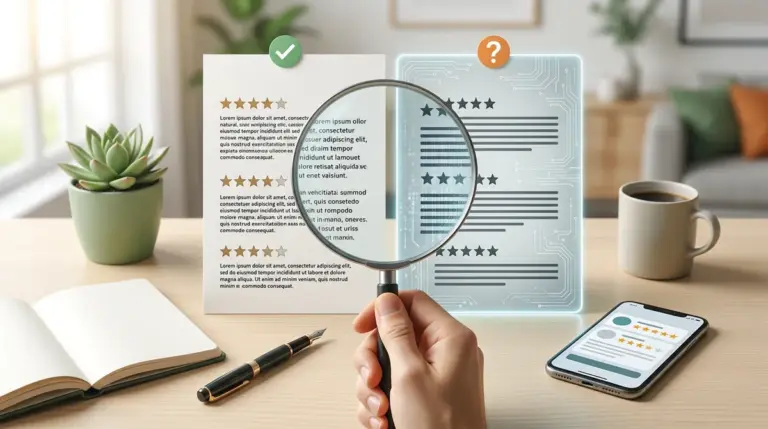


Buying five-star reviews offers an immediate, albeit artificial, boost to conversion rates, but the long-term cost to brand equity and search visibility is often terminal. For agencies and site owners, the temptation to "prime the pump" with fabricated feedback overlooks the sophisticated pattern-matching capabilities of modern review filters. When a business moves from a 3.2-star rating to a 4.9-star rating overnight without a corresponding spike in transactional data or organic traffic, it creates a footprint that Google, Amazon, and Yelp are designed to erase. The damage isn't just a deleted profile; it is the permanent loss of consumer confidence that occurs when a customer realizes the product experience doesn't match the advertised sentiment.
The Algorithmic Detection of Review Velocity and IP Clusters
Search engines and third-party review platforms do not just look at the content of a review; they analyze the metadata behind the submission. Review velocity—the rate at which new ratings are posted—must correlate with the known traffic and sales volume of a business. If a local service business typically receives two reviews a month and suddenly receives fifty in forty-eight hours, the profile is flagged for manual or automated review.
Common red flags include:
- IP Geolocation Mismatches: Reviews for a local plumber in Chicago originating from IP addresses in Southeast Asia or Eastern Europe.
- Account History: Reviewers who have only ever posted one five-star review or, conversely, reviewers who post hundreds of five-star reviews for unrelated businesses across different continents in a single week.
- Sentiment Uniformity: Natural reviews contain linguistic variance. Fake reviews often use repetitive "power words" or specific phrases dictated by the buyer to ensure keyword density, which creates a detectable pattern of unnatural language.
The Uncanny Valley of the Perfect Five-Star Rating
Data from the Spiegel Research Center indicates that the likelihood of a purchase peaks when a product has a star rating between 4.2 and 4.5. Once a rating reaches a perfect 5.0, consumer skepticism increases. Shoppers perceive a perfect score as "too good to be true," leading them to hunt for negative reviews to find the "real" story. If those negative reviews are missing because they have been suppressed or buried by fakes, the consumer often abandons the cart entirely.
Authenticity is found in the friction. A customer who complains about slow shipping but praises the product build quality provides more "social proof" than ten generic "Great product, fast shipping!" comments. By inflating scores, brands lose the opportunity to showcase how they handle legitimate criticism, which is a significant driver of high-ticket conversions.
Warning: The FTC’s updated "Rule on the Use of Consumer Reviews and Testimonials" allows for civil penalties of up to $51,744 per violation. This includes not just creating fake reviews, but also "review hijacking" (repurposing reviews from one product for another) and the suppression of negative feedback.
The Long-Term Decay of Organic Search Rankings
For SEO professionals, the primary risk of fake reviews is the "Manual Action" or the algorithmic demotion of the local map pack listing. Google’s Business Profile terms of service are explicit about "fake content." When a profile is caught participating in review circles or purchasing feedback, the immediate result is often the removal of all reviews—both fake and legitimate. In severe cases, the entire business listing is suspended.
Reclaiming a suspended listing is a grueling process that can take months, during which the business is invisible in local search results. Even after reinstatement, the "trust score" associated with the entity is compromised. The algorithm may prioritize competitors with lower overall ratings but higher "trust signals," such as verified purchase badges and organic engagement patterns.
The High Cost of Reputation Recovery
When fake reviews are exposed—either by a platform's "transparency alert" (like Yelp’s Consumer Warning) or by investigative customers—the brand enters a reputation deficit. Recovering from this requires significantly more investment than building a legitimate review funnel would have cost initially. You are no longer just asking for reviews; you are fighting a narrative of dishonesty.
Best for: Sustainable growth involves shifting budget from "buying" reviews to "earning" them through post-purchase automation. Tools that integrate with POS systems to send SMS or email review prompts at the moment of peak customer satisfaction yield a lower volume of reviews, but those reviews carry a "Verified" status that carries more weight in ranking algorithms.
The Trap of Review Gating
Many agencies attempt to "gate" reviews by sending customers to a landing page that asks: "Did you have a good experience?" If the user clicks "Yes," they are sent to Google. If they click "No," they are sent to a private feedback form. This is a violation of most platform terms of service. Algorithms are increasingly able to detect the absence of negative sentiment. A profile that has 500 positive reviews and zero negative ones over a three-year period is statistically impossible and serves as a signal for a deep audit.
Developing a Compliant Review Acquisition Strategy
Instead of risking the business on fabricated sentiment, focus on increasing the "ask" rate. Most satisfied customers simply forget to leave a review. By reducing the friction in the review process, you can build a defensive moat of authentic feedback that protects the brand against the occasional, inevitable one-star rating.
- Incentivize the Action, Not the Sentiment: Offer a small discount or entry into a giveaway for leaving *any* review, rather than a *positive* one. (Check local laws and platform TOS, as some forbid any incentives).
- Optimize the Timing: For service industries, the request should be sent within one hour of job completion. For e-commerce, it should be timed to 3-5 days after the confirmed delivery date.
- Respond to Everything: Replying to both positive and negative reviews signals to both the algorithm and the customer that the business is active and accountable.
Audit Your Profile for Vulnerabilities
To ensure your brand remains protected, perform a quarterly audit of your review profile. Look for sudden spikes in volume that you didn't authorize—competitors sometimes use "negative SEO" by buying fake positive reviews for a rival to trigger a suspension. If you find suspicious activity, report it to the platform immediately to establish a paper trail showing you are not the source of the manipulation. Focus on steady, incremental growth in review count and diversity of sentiment to build a profile that survives algorithmic updates and builds genuine buyer intent. Performing these checks can help you quickly understand how to spot fake reviews before they impact your brand's reputation.
Frequently Asked Questions
Can Google tell if I bought reviews?
Yes. Google uses machine learning to analyze IP addresses, device IDs, account history, and linguistic patterns. They also compare review volume against your site's traffic and known location data.
What is the penalty for fake reviews?
Platforms typically delete the reviews, but they can also suspend your business listing entirely. Legally, the FTC can issue substantial fines for deceptive marketing practices.
Should I delete negative reviews?
No. Most platforms don't allow you to delete them unless they violate specific terms (like hate speech). A few negative reviews actually increase the perceived authenticity of your positive ones and provide an opportunity to show good customer service through your response.
How do I get rid of fake reviews someone else bought for me?
Use the "Report" or "Flag" function on the specific review. Provide evidence of why it is suspicious, such as the reviewer not being in your customer database or the review originating from a different geographic region.