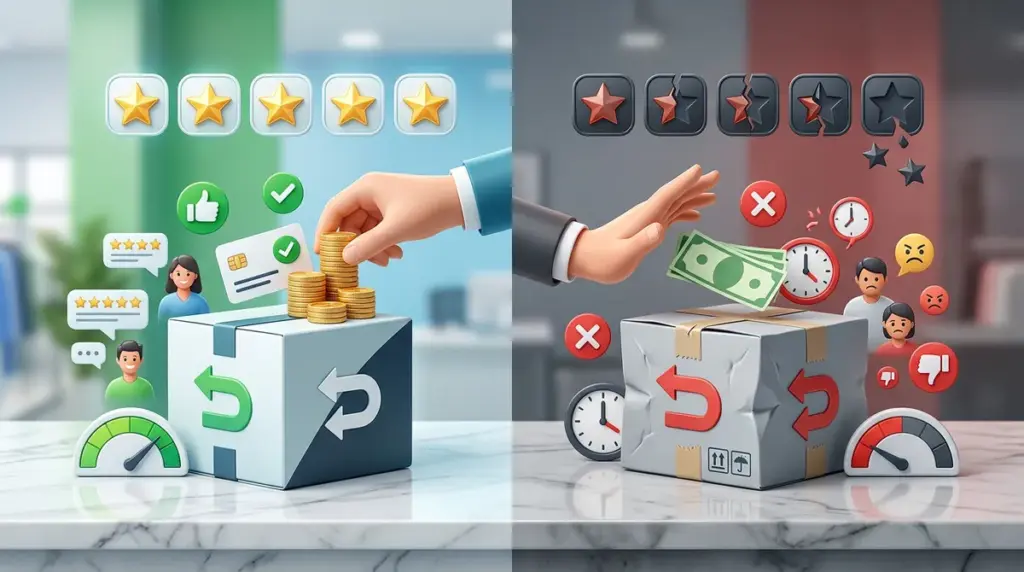
A refund request is rarely just a financial transaction; it is a high-stakes emotional event that dictates a brand's long-term visibility. For most digital businesses, the cost of a refund is calculated in lost revenue and transaction fees. However, the actual cost is often buried in the search engine results pages (SERPs). When a customer feels "trapped" by a restrictive return policy or ignored by a support team, their next destination is almost always a public review platform. This shift from a private dispute to a public grievance can suppress conversion rates for months or years. This shift from a private dispute to a public grievance can suppress conversion rates for months or years, highlighting how customer service recovery impacts future reviews.
Best for: E-commerce managers and SaaS founders looking to reduce churn-related brand damage.
The Direct Link Between Refund Friction and Review Velocity
Review velocity—the speed at which new reviews are posted—often spikes during periods of operational stress, such as shipping delays or software outages. If a company couples these issues with a high-friction refund process, the sentiment of those reviews shifts from "frustrated" to "vengeful." High-friction processes include requiring multiple phone calls to cancel a subscription, forcing customers to pay for return shipping on defective items, or maintaining "no refund" policies that contradict consumer protection laws in specific regions.
When a customer encounters these barriers, they use public reviews as leverage. This creates a "reputational debt" that is significantly more expensive to service than the original refund amount. A single 1-star review on a platform like Trustpilot or Google Business Profile can require ten 5-star reviews to neutralize its impact on the aggregate score. If your refund policy is the primary driver of these negative entries, you are effectively paying a premium to lose customers.
The Psychology of the 'Refund Hostage'
Customers who feel they are being "held hostage" by a company's billing department are the most likely to write detailed, long-form negative reviews. These reviews are particularly damaging because they often contain keywords related to "scam," "fraud," or "dishonest," which can trigger algorithmic red flags or appear in "People Also Ask" boxes on Google. The goal of a modern refund policy should be to de-escalate the situation before it reaches the public square.
Warning: Automated refund bots that fail to resolve complex cases often exacerbate frustration. If a customer is trapped in a logic loop while trying to get their money back, they will take a screenshot of the chat and post it directly to social media or review sites, providing visual proof of poor service.
Operational Metrics That Protect Reputation
To prevent refund requests from turning into reputational liabilities, businesses must track more than just the total dollar amount returned. You need to monitor the "Time to Resolution" for refund tickets and the "Sentiment Post-Refund."
- Refund Processing Window: Ideally, refunds should be initiated within 24 hours of the request. Delays beyond 3 business days significantly increase the likelihood of a chargeback or a negative review.
- Policy Transparency: Links to the refund policy should be present in the footer of every marketing email and on the checkout page. Obscuring the policy suggests a lack of confidence in the product.
- The 'No-Questions-Asked' Threshold: For low-ticket items (typically under $50), the labor cost of arguing with a customer often exceeds the product cost. Implementing an automated, no-questions-asked refund for low-value transactions can actually improve your net sentiment.
- Proactive Outreach: If a system error occurs, issuing a refund before the customer asks can turn a potential detractor into a brand advocate.
The Recovery Paradox: Turning Returns into Referrals
Service recovery is the process of resolving a service failure so effectively that the customer becomes more loyal than they were before the failure occurred. In the context of refunds, this is known as the "Recovery Paradox." A customer who receives a prompt, empathetic refund is statistically likely to mention the ease of the process in a positive review. These reviews are gold for conversion optimization because they mitigate the perceived risk for new buyers.
When a prospective lead sees a review that says, "The product didn't fit my needs, but the refund was processed in ten minutes without any hassle," they feel safe purchasing. You have removed the "buyer's remorse" barrier before the purchase even happens. In this scenario, the refund isn't a loss; it's a marketing expense that builds "safety net" social proof.
The Hidden Cost of Chargebacks
Beyond public reviews, refund friction leads to credit card chargebacks. Merchant accounts with high chargeback rates face higher processing fees or even termination. More importantly, chargebacks are a silent killer of brand reputation with payment processors like Stripe or PayPal. If these processors flag your business as high-risk, it can impact your ability to scale. A liberal refund policy is almost always cheaper than a high chargeback rate.
Building a Resilient Refund-to-Review Pipeline
To align your financial operations with your reputation management, you must integrate your support desk with your review monitoring tools. When a refund is issued, it should trigger a specific follow-up sequence. If the refund was handled well, this is the ideal time to ask for a "service review" rather than a "product review."
1. Segment your requests: Distinguish between "product didn't work" and "I can't afford this." The former needs a technical fix; the latter needs a quick exit.
2. Empower support agents: Give your front-line staff the authority to issue refunds up to a certain dollar amount without managerial approval. Speed is the primary variable in preventing negative feedback.
3. Analyze the 'Why': If a specific product has a high refund rate and a high negative review rate, it’s a systemic issue, not a customer service issue. Use the feedback in refund requests to inform product development.
By treating the refund process as a core component of your brand's public identity, you move from a defensive posture to a proactive one. You aren't just giving money back; you are buying the right to maintain a clean reputation in a competitive market.
Frequently Asked Questions
Does a high refund rate hurt my SEO?
Directly, no. Google does not see your internal financial records. However, indirectly, yes. If high refund rates are caused by poor product quality, this will eventually manifest as 1-star reviews and high bounce rates, both of which negatively impact your search rankings and click-through rates.
Should I respond to negative reviews that mention refunds?
Yes, but avoid getting into the specifics of the transaction. State clearly that you have a policy in place and invite them to move the conversation to a private channel to resolve it. A calm, professional response shows prospective customers that you are reasonable, even if the reviewer is not.
Can a 'No Refunds' policy ever be beneficial?
In high-ticket consulting or custom software development, "no refunds" is often necessary due to the labor already expended. However, in these cases, you must have a rigorous "milestone" sign-off process. For standard e-commerce or SaaS, a "no refunds" policy is a significant reputational risk that usually outweighs the short-term cash retention.