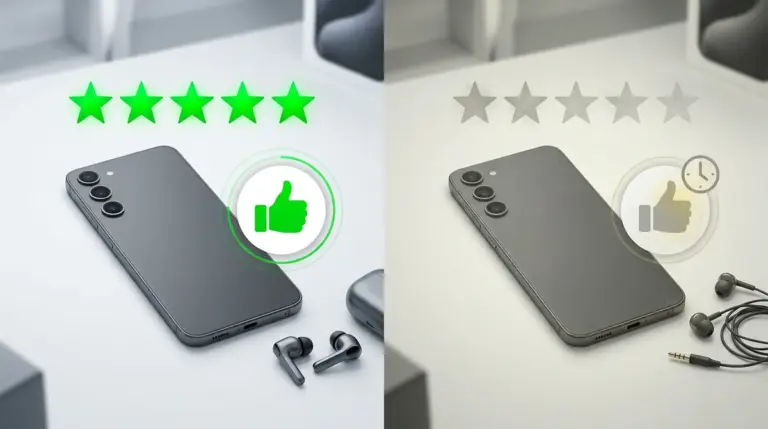
The distance between a product page view and a confirmed transaction is rarely a straight line; it is a gap bridged by risk mitigation. For high-ticket items or niche B2B services, the primary friction point is not the price, but the fear of a sub-optimal outcome. Social proof—specifically in the form of verified reviews—functions as the psychological shorthand that bypasses this friction by providing external validation of a brand's claims. When a prospect sees that others have successfully navigated the purchase, the perceived risk of the "unknown" drops, and the conversion probability rises proportionally.
The Mechanics of Informational Social Proof
Social proof operates on the principle of normative influence. In environments of uncertainty, humans look to the behavior of others to determine the correct course of action. In a digital commerce context, this manifests as a reliance on the collective experience of previous buyers to validate technical specifications or service promises. This is not merely about "liking" a product; it is about verifying that the product performs the specific function it claims to perform under real-world conditions.
Best for: Reducing cart abandonment in complex or high-cost categories where technical performance is non-negotiable.
The Threshold of Statistical Significance
A single five-star review is an anecdote; fifty reviews constitute a data set. Consumers are increasingly savvy regarding small sample sizes. Research indicates that conversion rates begin to stabilize and climb significantly once a product crosses the 20-review threshold. Below this number, the social proof is often dismissed as "seeded" or statistically insignificant. For agencies managing brand reputation, the goal is not just a high rating, but a volume of feedback that suggests a consistent, repeatable customer experience.
The Authenticity Paradox and the 4.5-Star Sweet Spot
Counter-intuitively, a perfect 5.0 rating often acts as a deterrent rather than a catalyst. Modern consumers are conditioned to be skeptical of perfection, frequently associating a flawless score with review gating, censorship, or fraudulent activity. The "Authenticity Paradox" suggests that a mix of positive and constructive feedback actually increases trust.
- Conversion Peak: Data from various e-commerce studies shows that purchase intent peaks when a product's average rating is between 4.2 and 4.7 stars.
- Risk Assessment: Negative reviews provide a "worst-case scenario" for the buyer. If the complaints are about shipping delays rather than product failure, a buyer who isn't in a rush will still convert.
- Transparency: Publicly responding to a 3-star review with a concrete solution demonstrates post-purchase support, which is often more persuasive than a generic 5-star testimonial.
Warning: Review gating—the practice of only soliciting reviews from customers you know are happy—is increasingly penalized by major platforms like Google and can lead to account suspensions or "consumer warning" badges that permanently damage brand equity.
Strategic Placement Throughout the Conversion Funnel
Social proof is frequently mismanaged by being relegated to a single "Testimonials" page. To maximize commercial impact, social proof must be deployed at specific friction points where the buyer is most likely to hesitate.
Top-of-Funnel: Aggregated Ratings in SERPs
For SEO professionals, the role of social proof begins in the Search Engine Results Pages (SERPs). Implementing Five Reviews markup (specifically Review or AggregateRating snippets) allows star ratings to appear directly in organic search results. This does not just improve the aesthetic of the listing; it significantly increases the Click-Through Rate (CTR) by providing immediate third-party validation before the user even reaches the site. This visual validation helps to reduce the perceived risk for potential customers, making them more inclined to click through.
Bottom-of-Funnel: Contextual Reviews Near the CTA
Placing specific, text-heavy reviews near the "Add to Cart" or "Request a Quote" button addresses final objections. If a user is concerned about the durability of a piece of hardware, a review specifically mentioning "six months of heavy use with no issues" placed right next to the buy button is more effective than a generic sidebar quote. This is about matching the content of the social proof to the likely anxiety of the buyer at that specific moment.
Differentiating Between B2B and B2C Social Proof
The weight and type of social proof required change depending on the buyer's journey. In B2C, volume and visual proof (user-generated photos) are the primary drivers. In B2B, the focus shifts to authority and specific use-case alignment.
B2C Focus: High volume, recent dates, and visual confirmation. If a customer can see a photo of the product in a real home, the "expectation gap" is closed.
B2B Focus: Industry relevance and ROI metrics. A marketing director doesn't care if 1,000 people "liked" a software; they care if a director at a similarly sized firm saw a 15% increase in efficiency.
Optimizing Your Social Proof Architecture
To turn social proof into a measurable revenue driver, brands must move beyond passive collection. This requires an active strategy of acquisition and display. Start by auditing your current review distribution. Are your reviews concentrated on a platform you don't own, or are they integrated into your own conversion funnels? Ensure that your highest-converting pages feature reviews that mention specific features or solve specific pain points. Finally, prioritize recency; a 5-star review from three years ago carries significantly less weight than a 4-star review from last week. The market moves fast, and consumers want to know how you are performing today, not how you performed during your launch phase.
Frequently Asked Questions
How many reviews are needed to influence a purchase?
While impact begins with the first few reviews, most consumers look for a minimum of 10 to 50 reviews to feel the data is reliable. For high-competition niches, this number may need to be significantly higher to match or beat the category leaders.
Does the length of a review matter for SEO?
Yes. Longer, detailed reviews often contain "long-tail" keywords and natural language that help your product pages rank for specific queries. Search engines value this user-generated content because it provides fresh, relevant information that brand copy often misses.
Should I delete negative reviews if they are unfair?
Generally, no. Unless a review violates platform terms (e.g., profanity or spam), deleting it can trigger a backlash if discovered. A better strategy is to respond professionally and publicly, as this demonstrates a commitment to customer service that can actually win over skeptical prospects.
What is the most effective type of social proof?
Verified purchase reviews are the gold standard. While celebrity endorsements or expert quotes have their place, the average consumer trusts the "person like me" more than a paid spokesperson. Video testimonials are currently seeing the highest engagement rates across social and landing pages.