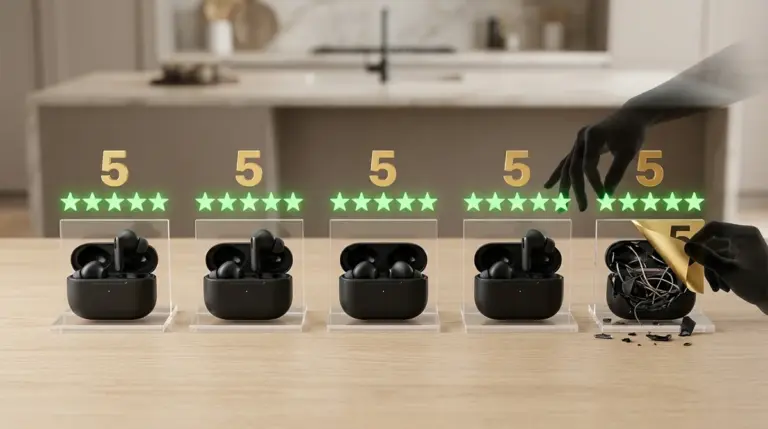


Marketing departments often treat trust as a commodity that can be purchased through high-production video ads or aggressive PR blitzes. This is a fundamental miscalculation of how modern buyers—particularly in the B2B and high-ticket service sectors—evaluate a brand. High-budget campaigns are polished, curated, and inherently biased. Consequently, they are viewed with skepticism by default. Real trust is built in the unpolished, granular interactions that occur in public view: the response to a critical 2-star review, the transparency of a public roadmap, or the tone of a technical support thread on a public forum.
For agencies and publishers, these "small moments" are the primary drivers of conversion. When a lead moves from the awareness phase to the consideration phase, they stop looking at your landing pages and start looking at your behavior in the wild. If your marketing says you are "customer-centric" but your Google Business Profile shows three months of unanswered complaints, the campaign has failed. The gap between what you say in a campaign and what you do in a public micro-moment is where brand equity either compounds or evaporates.
The Erosion of the "Big Reveal" Marketing Model
The traditional model of brand building relied on the "Big Reveal." A company would spend six months in stealth mode, craft a perfect narrative, and launch it with a massive spend. In an era of radical transparency, this model is increasingly fragile. Today, every customer is a potential whistleblower or brand advocate with a global megaphone. Information asymmetry—the advantage a brand has by knowing more than the consumer—has vanished.
Best for: High-ticket service providers and SaaS companies where the lifetime value (LTV) justifies the manual effort of individual engagement.
Trust is now a byproduct of consistency over time rather than the intensity of a single moment. A campaign is an event; trust is a baseline. When you prioritize small public moments, you are providing "proof of work." Prospective clients look for these patterns because they are much harder to fake than a 30-second commercial. They want to see how you handle friction when things go wrong, as that is the truest indicator of future performance.
The ROI of Public Friction Management
Most brands view a negative public comment as a crisis to be buried. This is a missed commercial opportunity. A well-handled public disagreement or a transparent admission of a mistake is often more persuasive than a dozen five-star testimonials. It demonstrates that the brand is managed by humans who are accountable. When a prospect sees a brand address a failure publicly, it de-risks the purchase. They know that if they encounter a similar issue, they won't be ignored.
Warning: Automated, "canned" responses to public criticism are worse than silence. They signal to the market that your brand values efficiency over resolution, which is the fastest way to kill premium positioning.
Five Micro-Moments That Dictate Your Brand Authority
To move from campaign-led trust to interaction-led trust, you must identify the specific touchpoints where your audience is looking for "unfiltered" data. These moments are often outside of your direct control but within your influence.
- The "Third-Party" Response: How you interact with users on platforms like Reddit, Quora, or niche industry forums where you don't own the "home field" advantage.
- Review Remediation: The specific steps you take to resolve a public complaint, documented in the reply thread for all future prospects to see.
- Feature Request Transparency: Publicly acknowledging what your product or service cannot do, rather than over-promising to secure a lead.
- Technical Documentation and Changelogs: Providing granular detail on updates or fixes, which signals a high level of operational competence.
- Social Listening Tone: Engaging with industry peers without a direct sales pitch, establishing your brand as a helpful participant rather than a persistent solicitor.
The SEO Impact of Sentiment and Interaction
Beyond the psychological impact, small public moments have a direct effect on search performance. Google’s E-E-A-T (Experience, Expertise, Authoritativeness, and Trustworthiness) guidelines increasingly look for off-site signals. If your brand is frequently mentioned in a positive, helpful context across various platforms, search engines interpret this as a signal of authority. High engagement rates in review sections and low "bounce-back" rates from search results—where a user finds the answer they need within your ecosystem—contribute to a stronger organic presence.
Furthermore, "branded search" volume is often driven by these micro-interactions. A user might see a helpful, nuanced response from your team on a forum and then search for your brand specifically. These are high-intent visitors who bypass the competitive "generic keyword" landscape and enter your funnel with a pre-established level of trust.
Shifting Resources from Creative to Community
For most organizations, this shift requires a reallocation of the marketing budget. Instead of funneling 90% of the budget into creative production and ad spend, a portion should be diverted to "reputation engineering." This means hiring or training staff who have the technical depth to engage in high-level public discussions and the emotional intelligence to manage conflict. This is not a task for a junior social media intern; it is a task for subject matter experts.
Differentiator: Brands that empower their technical staff or senior leadership to engage publicly outperform those that funnel all communication through a filtered PR department. Authenticity is difficult to scale, but it is the only thing that creates a durable competitive advantage in a crowded market.
The Cost of Inconsistency
The greatest risk to this strategy is inconsistency. If a brand is highly responsive on Twitter but ignores its Google Business Profile, it creates a "trust gap." Prospects will notice the discrepancy and wonder which version of the brand they will get after they sign the contract. A unified approach to small moments ensures that no matter where a prospect "pokes" the brand, it feels solid and responsive.
Auditing Your Brand’s Micro-Moments
To transition into a trust-first posture, you must evaluate your current public footprint through the lens of a skeptical buyer. This is not about looking for "good" or "bad" metrics, but about looking for "human" and "helpful" interactions. Use the following steps to audit your presence:
First, identify the top three platforms where your audience seeks peer advice. This might be a specific Slack community, a LinkedIn group, or a review site. Analyze the last ten interactions your brand had on these platforms. Were they defensive? Were they generic? Or did they provide specific, actionable value to the person asking the question?
Second, examine your response time and resolution rate for public inquiries. Speed is a proxy for care. If it takes your team four days to respond to a public question, the market assumes your internal support is even slower. Aim for a "public resolution" mindset where the goal is not just to move the conversation to a private DM, but to solve the problem in a way that educates everyone watching the thread.
Third, look at your "transparency score." Do you publicly admit when a service goes down or a mistake is made? If your public feed is a constant stream of "everything is perfect" updates, you are actually building a wall of distrust. The most trusted brands are those that are honest about their flaws and proactive about their fixes.
Frequently Asked Questions
How do we handle "bad faith" public actors or trolls?
Distinguish between a customer with a legitimate grievance and a troll looking for a reaction. For legitimate grievances, provide a factual, empathetic response that outlines a solution. For trolls, provide one firm, professional response that corrects any factual inaccuracies and then disengage. The audience isn't watching to see if you win the argument; they are watching to see if you remain professional under pressure.
Does this mean we should stop doing big marketing campaigns?
No. Campaigns are excellent for reach and awareness. However, the campaign should be the "invitation," while the small public moments are the "experience." Use campaigns to tell people who you are, but use micro-interactions to prove it. The two should work in a feedback loop where the campaign promises what the daily interactions deliver. This feedback loop is vital to avoid situations where marketing promises outrun customer experience.
Who should be responsible for managing these small moments?
It should be a cross-functional effort. Marketing can set the tone and monitor the platforms, but the actual responses often need to come from product, support, or executive leadership. The more "real" the person responding feels, the more weight the interaction carries. Avoid using a generic "Brand Team" account whenever possible; use individual names and titles to humanize the interaction.
How do we measure the success of a "small moments" strategy?
Look at qualitative signals like sentiment shifts in reviews and quantitative signals like branded search growth, referral traffic from community sites, and a decrease in the sales cycle length. When trust is high, prospects ask fewer "validation" questions during the sales process because they have already seen the proof of your competence in public.