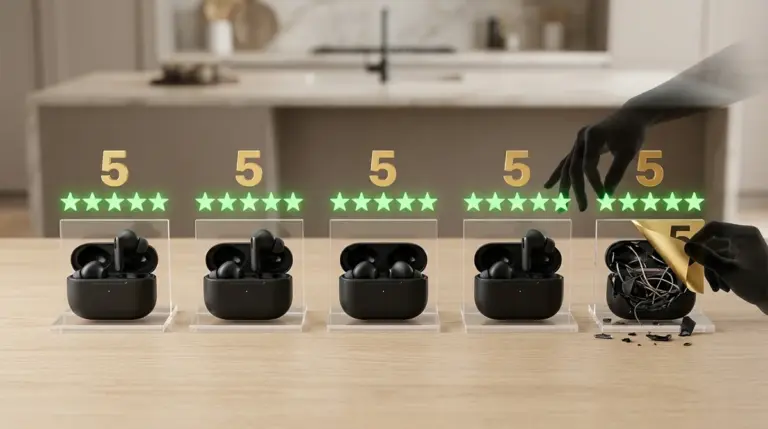

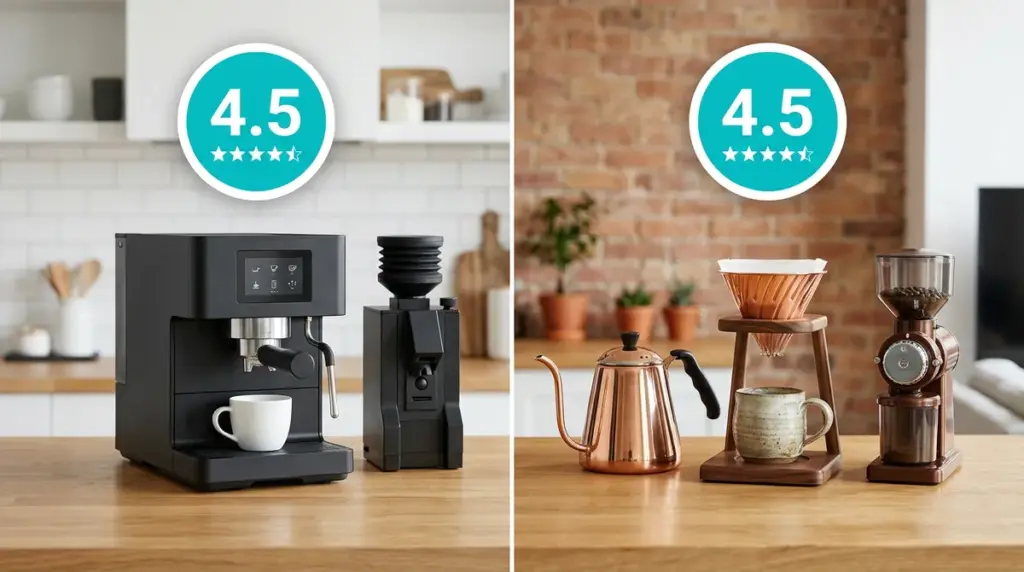
A 4.8-star rating is a statistical abstraction that often masks fundamental operational differences. When two software platforms or service providers sit side-by-side on a comparison table with identical scores, the procurement process usually stalls. Buyers assume parity where none exists. In reality, a score is a lagging indicator of general satisfaction, while the user experience is a leading indicator of long-term ROI. One brand may earn its high marks through aggressive feature expansion and enterprise-grade security, while its competitor achieves the same score through a streamlined UI and a frictionless onboarding process.
The Weighted Average Trap
Review aggregates are rarely normalized for user intent. A "5-star" rating from a solo consultant using a tool for basic automation carries the same mathematical weight as a "5-star" rating from a CTO managing a global team of 200. This creates a parity illusion. Brand A might be a legacy incumbent with deep functionality but significant technical debt, maintaining its score through a massive, loyal user base that has grown accustomed to its quirks. Brand B might be a nimble newcomer with 10% of the features but a 100% success rate in the specific niche it serves.
Best for: High-volume agencies should prioritize "Feature Depth" over "Ease of Use" scores, as the initial learning curve is a one-time cost, whereas limited functionality is a recurring tax on productivity.
Feature Depth vs. Feature Breadth
Two SEO tools might both score a 9/10 for "Functionality." However, the first tool might offer a broad suite of mediocre features—rank tracking, site audits, backlink analysis, and social media scheduling—none of which are best-in-class. The second tool might focus exclusively on enterprise-level site audits, offering crawl depths and data visualization that the first cannot touch. On paper, they look equal. In practice, the "broad" tool feels cluttered and shallow to a specialist, while the "deep" tool feels indispensable.
Infrastructure and the Burden of Legacy Code
The "feel" of a brand is often dictated by its underlying architecture. Older companies that have undergone multiple acquisitions frequently suffer from fragmented user interfaces. You click a button in the modern dashboard and are suddenly transported to a legacy settings page that looks like it belongs in 2012. Even if the tool performs the task perfectly, the cognitive load of navigating inconsistent UI elements creates a "clunky" perception.
Conversely, a "cloud-native" competitor built on a unified tech stack will feel snappy and intuitive. This responsiveness isn't just aesthetic; it impacts the speed of execution. If a platform takes three seconds to load a report instead of 300 milliseconds, that friction compounds across a 40-hour work week. The score remains high because the data is accurate, but the daily utility is vastly different.
Warning: Beware of "Review Gating" where brands only prompt users for feedback after a successful milestone or a positive support interaction. This artificially inflates scores and hides systemic workflow issues that only surface during high-stress periods or complex deployments.
Support Architecture: Documentation vs. Human Intervention
Customer success is a major component of any aggregate score, yet the delivery methods vary wildly. Brand A might invest heavily in a robust, searchable knowledge base and AI-driven chatbots. This works perfectly for self-sufficient users who want to solve problems at 2:00 AM without talking to a human. Brand B might have a thinner documentation library but offers a dedicated Slack channel with a senior engineer for every account.
- Asynchronous Support: Best for standardized workflows and low-complexity tasks.
- Synchronous Support: Critical for custom API integrations and high-stakes deployments.
- Community-Led Support: Useful for brands with large ecosystems where third-party plugins are common.
- Ticket-Based Support: Often leads to "score decay" if response times exceed 24 hours, regardless of the eventual solution's quality.
The Financial Friction of Seat-Based Scaling
Two brands with similar "Value for Money" scores may have diametrically opposed pricing philosophies. One might use a "freemium" model with a low entry point but aggressive upselling for essential security features like SSO (Single Sign-On). The other might have a high flat fee that includes unlimited seats and every feature unlocked. A small agency will rate the first brand as "Excellent Value," while an enterprise firm will find it prohibitively expensive as they scale. The aggregate score doesn't tell you which side of that fence you are on.
Ecosystem Lock-in and Integration Fluidity
A tool does not exist in a vacuum. The "feel" of a brand is heavily influenced by how well it plays with your existing stack. Brand A might have 500 "native" integrations that are essentially basic webhooks. They "work," but they require manual mapping and frequent troubleshooting. Brand B might only have 20 integrations, but they are deep, two-way syncs that allow you to manage the tool entirely from within Salesforce or Slack.
For a marketing manager, Brand B feels like a seamless extension of their workflow. Brand A feels like another tab they have to keep open. Both get a 4.5 for "Integrations" because technically, the connection exists, but the operational reality is night and day.
Audit Your Workflow Before the Trial
To differentiate between two high-scoring brands, you must move past the feature list and look at the "User Path." Map out the three most frequent tasks your team will perform. During a trial, count the number of clicks required to complete these tasks in both tools. This "Click-to-Completion" metric is a far more accurate predictor of team adoption than an aggregate review score.
Verify the "Data Portability" of each brand. High-scoring brands often make it easy to import data but notoriously difficult to export it in a clean, usable format. A brand that feels "open" and allows for easy data migration is prioritizing long-term trust over short-term retention—a distinction that rarely shows up in a star rating but defines the professional relationship.
Frequently Asked Questions
Why do some low-rated tools feel better than high-rated ones?
Rating bias often favors tools with simple interfaces. A complex, professional-grade tool may have a lower score due to a steep learning curve, but for an expert user, it provides significantly more utility and precision than a "highly rated" entry-level alternative.
How can I spot fake or incentivized reviews?
Look for "cluster reviews" where multiple 5-star ratings appear within the same 48-hour window, often using similar phrasing or focusing on a single, non-specific benefit like "great customer service" without mentioning a specific feature or use case.
Does a high "Ease of Use" score always mean better productivity?
Not necessarily. Ease of use often correlates with a lack of customization. If your workflow requires specific logic or custom data fields, an "easy" tool might actually slow you down by forcing you to use workarounds or external spreadsheets.
Should I trust scores on third-party comparison sites?
Only as a starting point. Most comparison sites use affiliate models or "pay-to-play" placements that influence visibility. Use them to build a shortlist, then verify the technical specifications and support tiers directly with the vendors.