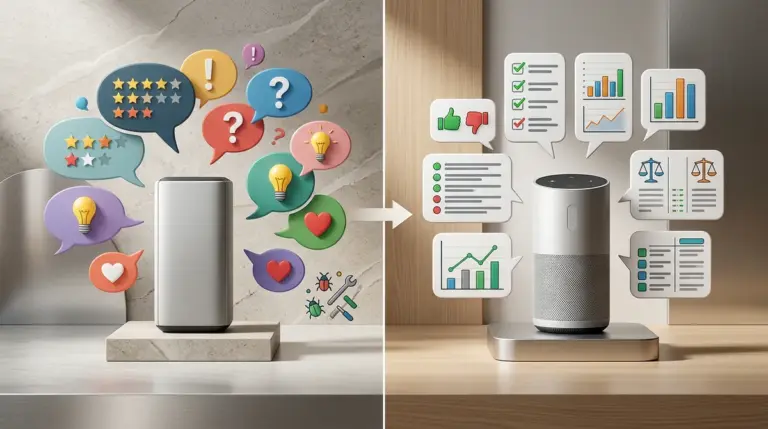


In the procurement cycle for SEO software or agency services, positive sentiment is the least reliable metric for success. A five-star rating often indicates nothing more than a basic functional alignment or a successful onboarding phase. For a lead SEO or a marketing director, these accolades offer zero insight into how a tool performs under load, how an agency handles a core update crisis, or where the technical debt lies. Detailed complaints, conversely, provide a roadmap of the product’s boundaries. They reveal the specific conditions under which a solution fails, allowing buyers to determine if those failures are deal-breakers or manageable trade-offs. When evaluating software, it's often more useful to understand what repeat complaints can reveal about product design than to focus solely on positive feedback.
The Technical Value of Specific Grievances
Generic praise like "user-friendly interface" or "excellent customer service" is commercially hollow. It doesn't tell a developer if the API documentation is outdated or if the data export caps out at 50,000 rows. A detailed complaint, however, usually contains specific technical friction points. When a user laments that "the keyword clustering tool fails to group synonyms in non-English languages," they have provided a high-value data point for global agencies. This level of granularity allows a prospective buyer to skip the sales demo fluff and head straight to the technical limitations that will actually impact their workflow.
Negative reviews often highlight the "breaking points" of a service. These include:
- Latency under volume: How the UI behaves when managing 10,000+ keywords or backlink profiles.
- Integration fragility: Specific errors encountered when syncing with Google Search Console or third-party CRMs.
- Data Refresh Rates: Discrepancies between advertised real-time data and the actual lag observed in the dashboard.
- Support Escalation: Whether "24/7 support" means a knowledgeable engineer or a scripted chatbot that cannot resolve billing disputes.
Identifying Structural Weaknesses Through Pattern Recognition
One disgruntled user might be an outlier, but three users complaining about the same reporting bug over a six-month period indicates a structural issue in the vendor's development cycle. When reading reviews, the objective is not to find a perfect product—those do not exist—but to identify recurring themes in the "Con" column. If multiple reviews mention that an agency’s account managers rotate every three months, you are looking at a high-churn environment that will likely disrupt your long-term strategy. Praise rarely reveals these internal operational instabilities. When reading reviews, the objective is not to find a perfect product—those do not exist—but to identify recurring themes in the con column, which often highlights why long-term reviews matter more than first impressions.
The "Feature Gap" vs. "Feature Bug" Distinction
A helpful complaint distinguishes between a missing feature and a broken one. If a reviewer states, "The tool lacks a dedicated mobile app," that is a feature gap that may not matter to a desktop-heavy SEO team. However, if the complaint is, "The PDF reports frequently show zeroed-out data for local map packs," that is a functional failure. Distinguishing between these two allows a buyer to assess whether the tool’s weaknesses align with their own operational requirements.
Warning: Beware of "Review Bombing" or complaints regarding price alone. A technical professional should ignore "too expensive" and look for "the cost-to-value ratio dropped when they removed the API access from the mid-tier plan." The latter is a business intelligence insight; the former is just a budget constraint.
Why "Easy to Use" is Often a Red Flag
In the context of professional-grade SEO tools, "easy to use" is frequently shorthand for "lacks depth." When a review is overwhelmingly positive about the simplicity of a platform, it often suggests that the tool has abstracted away the complex data controls that senior practitioners require. A detailed complaint about a "steep learning curve" or "overly complex filtering" is often a signal that the tool offers the granular control necessary for high-level analysis. For a power user, the "complaint" about complexity is actually a confirmation of the tool's capability.
The Burden of the Contented User
Happy users rarely stress-test a product. They stay within the "happy path"—the sequence of actions the developers intended them to take. It is the frustrated user who tries to push the software to its limits, attempting bulk uploads, complex regex filters, or cross-domain competitive mapping. Their complaints are the result of rigorous, unintentional testing. By analyzing where they hit a wall, you can see the true perimeter of the software’s utility.
Evaluating Agency Performance Beyond the Case Study
Agency case studies are curated narratives where every variable was controlled. Reviews and complaints are the only places to find the "unfiltered" version of the partnership. A complaint about an agency’s lack of transparency during a ranking drop is worth ten testimonials about a successful migration. It reveals the agency’s "war-time" posture. Buyers should look for feedback regarding how the provider handles mistakes, as the resolution process is a better indicator of long-term ROI than a period of easy growth.
Building a Risk Profile Before Purchase
To use complaints effectively, create a risk-assessment matrix based on the feedback found. Instead of asking "Is this tool good?", ask "Can I live with these specific failures?"
1. Categorize the Complaint: Is it a UI preference, a technical limitation, or a support failure?
2. Check the Recency: Was the complaint made three years ago? If so, check the changelog to see if it was addressed. If it was made last month, assume it is still an active issue.
3. Assess the Workaround: If a user complains about a lack of data visualization, can you solve this by exporting the raw data to Looker Studio? If the answer is yes, the complaint validates the data's accessibility while highlighting a cosmetic flaw.
By focusing on the friction points, you move from an emotional purchase to a functional one. You are no longer buying a promise; you are licensing a known set of capabilities and limitations.
Frequently Asked Questions
How do I know if a negative review is fake or from a competitor?
Look for specific technical details. Fake reviews are usually vague ("This tool is terrible, don't buy it"). Real complaints mention specific features, error messages, or workflow interruptions that only a genuine user would encounter.
Should I avoid products with a high volume of complaints?
Not necessarily. High-volume tools (market leaders) naturally have more complaints because they have more users. Look at the ratio of complaints to the total user base and the severity of the issues raised rather than the raw number.
What is the most important type of complaint to look for in SEO software?
Data integrity and refresh frequency. If users are consistently complaining that the data is stale or doesn't match the source (GSC/Bing Webmaster Tools), the core value of the tool is compromised, regardless of how good the UI looks.
How should I bring up these complaints during a sales demo?
Be direct. Say: "I've seen several reports that your API throttles significantly when pulling historical backlink data. How has this been addressed in the latest update?" A transparent answer is a sign of a healthy vendor; a dismissive one is a red flag.