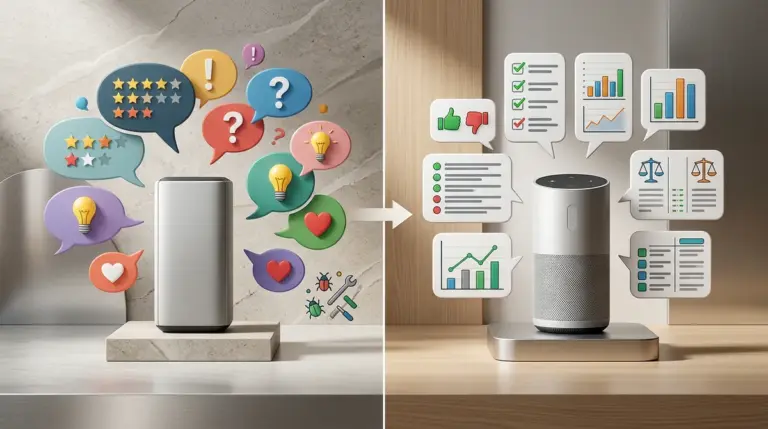


Marketing budgets are highest the day a product launches, yet that is precisely when the least is known about its long-term performance. For SEO professionals and agency owners, this creates a dangerous information gap. Early-stage reviews are frequently shaped by curated beta environments, incentivized feedback loops, and the "honeymoon phase" of user experience. When a new SaaS tool or platform hits the market, the initial wave of content is rarely a stress test; it is a reflection of the manufacturer’s controlled narrative. For SEO professionals and agency owners, this creates a dangerous information gap, highlighting how to read product reviews critically rather than accepting them at face value.
The Incentivized Echo Chamber of Beta Testing
Most early reviews originate from beta testers who have spent weeks or months in a closed ecosystem. While these users provide essential bug reports, their public-facing reviews are often skewed by proximity to the development team. In many cases, beta access is granted to influencers or power users in exchange for "honest feedback," but the psychological weight of being an "insider" often softens the critique.
Furthermore, beta environments are typically low-load. A tool that performs flawlessly with 100 testers may experience significant API latency or database timeouts when scaled to 10,000 concurrent users. Early reviews written during the beta phase cannot account for these infrastructure stresses. If a review does not mention performance under high data volumes or complex multi-user workflows, it is likely reflecting a sanitized environment rather than a real-world production setting.
The Distortion of Lifetime Deals and Affiliate Incentives
The rise of Lifetime Deal (LTD) platforms has fundamentally changed the reliability of early software reviews. When a product launches with a one-time price point, the reviewer’s motivation shifts from evaluating long-term ROI to justifying a "buy it before it’s gone" decision. This creates a surge of positive sentiment driven by FOMO (Fear Of Missing Out) rather than technical merit.
- Affiliate Commission Bias: Early reviews often contain "buy now" links with high commission rates. This incentivizes reviewers to gloss over missing features or "coming soon" roadmap items that may never actually materialize.
- The Sunk Cost Fallacy: Users who have invested in an LTD are less likely to publicly criticize the tool, as doing so diminishes the perceived value of their own investment.
- Roadmap Over-Reliance: Early reviews frequently treat a developer's "Public Roadmap" as a list of guaranteed features. In reality, post-launch technical debt often forces teams to pivot, leaving early adopters with a tool that lacks the specific integrations they were promised.
Warning: Never base a procurement decision on a "Coming Soon" feature list. If the tool does not solve your current problem on the day of purchase, the investment is a gamble on the developer's future solvency and engineering capacity, not a business solution.
The Gap Between UI Polish and Backend Stability
Modern development frameworks allow startups to build beautiful, responsive interfaces (UI) very quickly. However, the backend logic—the part that handles data processing, security, and integration—takes much longer to mature. Early reviews are disproportionately focused on the UI because it is the most visible element. A reviewer might praise the "clean dashboard" or "intuitive navigation" while failing to notice that the data export function is buggy or the third-party integrations frequently disconnect.
For agencies, a beautiful UI is secondary to data integrity. If an SEO tool reports inaccurate keyword volumes or fails to refresh data on schedule, the aesthetic quality of the charts is irrelevant. Early reviews rarely have the longevity to track data drift or consistency over several months, which is the only way to verify the reliability of a backend engine.
How to Identify "Hype-Driven" Review Patterns
To cut through the noise, buyers must look for specific linguistic and technical markers that differentiate a rigorous evaluation from a marketing-adjacent summary. Hype-driven reviews tend to use abstract nouns and superlative adjectives without providing the underlying data to support them.
Look for these red flags:
Lack of Negative Trade-offs: Every piece of software has a trade-off. If a tool is fast, it might lack deep features. If it is feature-rich, it might have a steep learning curve. A review that presents no downsides is a marketing brochure, not an evaluation.
Repetitive Feature Lists: If the review reads like the product’s own landing page, the reviewer likely hasn't used the tool in a high-pressure environment.
Short Testing Windows: Check the date of the review against the product's launch date. If the review was published 24 hours after the tool went live, the "deep dive" is impossible.
The "Founder Effect" on Early Sentiment
In the early stages of a product launch, founders are often highly active in communities like Slack, Discord, or Facebook Groups. This direct access creates a halo effect. Users feel a personal connection to the developers and are more likely to forgive bugs or missing features. While founder transparency is a positive trait, it distorts the "review" landscape by replacing objective performance metrics with personal rapport. When the company scales and the founders are no longer available to personally troubleshoot issues, the perceived quality of the tool often "drops," even if the software itself hasn't changed.
Establishing a Post-Launch Evaluation Protocol
To avoid the pitfalls of launch hype, agencies and SEO professionals should implement a 90-day waiting period for non-essential tools. This allows the initial "honeymoon" sentiment to fade and gives the developer time to address the first wave of post-launch bugs.
When evaluating a new tool during its first six months, prioritize these three checks:
- Support Response Times: Test the support desk with a complex technical query, not a basic billing question. This reveals the actual depth of the team behind the product.
- Data Portability: Ensure you can get your data out as easily as you put it in. Many early-stage tools focus on ingestion but have poorly optimized export functions.
- Changelog Velocity: Monitor the changelog for 30 days. Are they fixing core stability issues, or just adding "shiny" new features to attract more launch sales?
Building a Resilient Software Vetting Process
The goal of reading a review should not be to find a reason to buy, but to find a reason the product might fail in your specific workflow. By ignoring the initial surge of launch content and waiting for the "Day 180" reviews, you gain a much clearer picture of the tool's true trajectory. Practical procurement requires looking past the polished UI and the enthusiastic endorsements of early adopters to see the technical reality of the software as it exists today, not as it is promised for tomorrow.
Frequently Asked Questions
How long should I wait after a product launch before trusting the reviews?
A minimum of 90 to 180 days is recommended. This allows the "early adopter" bias to subside and gives the developer time to encounter and fix real-world scaling issues that don't appear in beta testing. This approach to reading reviews emphasizes that waiting for later reviews offers a much more reliable assessment of a product's true quality.
Are negative early reviews more reliable than positive ones?
Not necessarily. Early negative reviews can sometimes be the result of user error or "onboarding friction" as the product matures. Look for reviews that provide specific technical grievances rather than general frustration.
What is the most reliable source for unbiased software feedback?
Closed professional communities (such as private agency masterminds or technical SEO forums) are generally more reliable than public review sites or affiliate-driven blogs, as the members have no financial incentive to promote the tool.