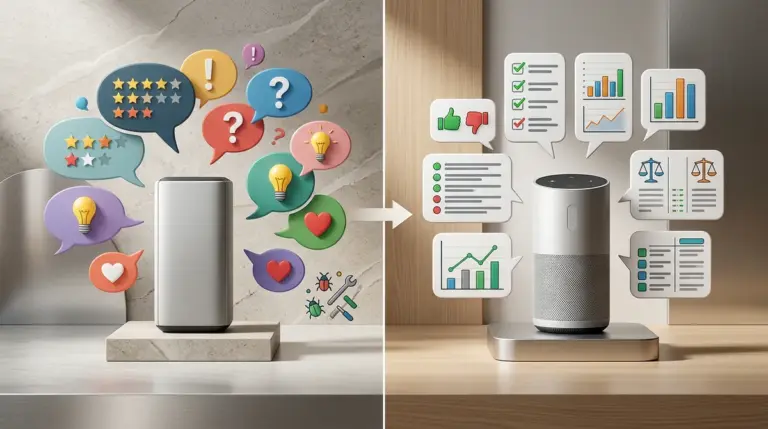


Product research has transitioned from a search for information to a battle against misinformation. When a single product carries a 4.8-star rating on Amazon, a scathing teardown on a specialist hobbyist forum, and a lukewarm video review on YouTube, the buyer is left with a data conflict rather than a consensus. Comparing reviews across multiple sites requires a systematic approach to filtering out affiliate-driven bias, identifying recurring mechanical failures, and weighting the credibility of different platforms. This conflict highlights why understanding how to read product reviews effectively is so important for modern consumers.
The Hierarchy of Review Credibility
Not all review platforms are engineered with the same incentives. To compare effectively, you must categorize sources by their proximity to the transaction. Amazon and Walmart reviews are high-volume but prone to "review hijacking" and "brushing" scams. Specialized forums like Reddit or niche-specific boards (e.g., Head-Fi for audio or Five Reviews for PC hardware) offer lower volume but higher technical density. Professional editorial sites sit in the middle, providing structured testing but often influenced by affiliate commission structures. Recognizing these platform differences helps mitigate how launch hype distorts reviews, especially when initial excitement overshadows genuine user experience.
Best for identifying long-term durability: Reddit and long-tail forum threads. Users often return to these threads months or years later to report component failure, a data point rarely captured in "Day 1" Amazon reviews.
Best for identifying manufacturing defects: High-volume retailers like Amazon or Best Buy. Look specifically at 2-star and 3-star reviews. These typically bypass the "angry outlier" 1-star rants and the "incentivized" 5-star praise, focusing instead on specific functional flaws.
Using Sentiment Analysis and Verification Tools
Manual comparison is slow. To speed up the process across multiple sites, use technical filters that analyze the metadata of the reviews themselves. Tools like Fakespot and ReviewMeta do not just look at what the review says; they look at the reviewer's history, the timing of the posts, and the linguistic patterns that suggest a bot or a paid actor. When comparing a product across platforms, run the primary retailer URL through these tools to establish a "true" adjusted rating before looking at secondary sources.
Pro Tip: When using Google to find authentic comparisons, use the
site:Five Reviewsorsite:Five Reviewsoperators combined with the product name and the word "vs" or "flaw." This bypasses the SEO-optimized "Top 10" lists that dominate the first page of search results and takes you directly to user-to-user discussions.
Cross-Platform Consensus Mapping
The most effective way to compare reviews is to look for the "Consensus Flaw." If an ultra-wide monitor is praised for its color accuracy on a tech blog but three different users on a forum complain about "flickering at 144Hz," and a handful of Amazon reviews mention "power supply whine," you have identified a pattern of hardware instability that a 24-hour professional review might miss.
- Identify the recurring noun: Scan reviews for specific parts (e.g., "hinge," "battery," "software update"). If the same noun appears in negative contexts across three different sites, it is a verified risk.
- Check the "Verified Purchase" discrepancy: If a product has glowing reviews on its own brand website but poor reviews on third-party retailers, prioritize the third-party data. Brands have total control over which reviews they publish on their own domains.
- Compare the "Update" logs: Professional reviewers often update their articles. Check the date of the review against the product’s firmware or version history. A review from 2022 may no longer be relevant if a 2023 software patch fixed the primary complaints.
The Video vs. Text Divergence
Video reviews on platforms like YouTube provide visual evidence of build quality and scale that text reviews cannot convey. However, they are often the most susceptible to "review samples"—units hand-picked by the manufacturer to ensure they are free of defects. When comparing, use video reviews to judge aesthetics and UI responsiveness, but rely on text-based user reviews for reliability data. User reviews on retail sites represent the "off-the-shelf" experience, which is the only experience that matters to the buyer.
Weighting the Data for a Final Decision
To reach a final verdict, assign a weight to each source. A detailed teardown on a site like RTINGS or Digital Foundry should carry more weight for technical performance than 500 one-sentence reviews on a retail site. Conversely, if 10% of those 500 reviews mention the same catastrophic failure, that volume outweighs a single positive professional review.
Best for technical benchmarks: Specialized testing labs. These sites use oscilloscopes, colorimeters, and standardized stress tests that remove human subjectivity from the comparison.
Executing a Multi-Site Audit
To perform a final audit before purchase, follow this three-step sequence. First, find the technical ceiling of the product through professional benchmarks. Second, find the practical floor by reading the most recent 20-30 user reviews on a high-volume retail site, sorting by "Most Recent" rather than "Top Rated" to see the current manufacturing quality. Third, verify the "real-world" longevity by searching for the product name + "long term" or "1 year later" on community forums.
This method moves beyond simple star-rating comparisons and creates a three-dimensional view of the product's performance, reliability, and value. By treating every review site as a specific type of data sensor—rather than a definitive source of truth—you can synthesize a more accurate conclusion than any single site can provide.
Common Cross-Review Hurdles
How do I handle conflicting reviews between two reputable sites?
Look at the testing methodology. One site may test a laptop in an air-conditioned lab, while another tests it in a real-world office environment. Differences in ambient temperature, software versions, or peripheral usage can lead to different results. If the methodologies are identical but the results differ, check the "received for free" disclosure; even reputable sites can be subconsciously swayed by long-term relationships with manufacturers.
Should I trust reviews on the manufacturer's own website?
Rarely. Manufacturers use "review seeding" where they send free products to their most loyal customers in exchange for reviews. While not inherently dishonest, these reviews lack the critical friction found on neutral ground. Use the manufacturer's site only to confirm technical specifications, not to gauge user satisfaction.
What is the most reliable way to spot a fake review pattern?
Look for "clustering." If a product receives a surge of 5-star reviews over a 48-hour period, especially if the language is repetitive or lacks specific detail, it is likely a paid campaign. Authentic reviews are usually distributed evenly over time and vary significantly in length and tone.
How many sites should I check before making a high-ticket purchase?
For any purchase over $500, you should consult at least four distinct types of sources: one professional testing lab, one high-volume retailer, one enthusiast forum, and one long-term "user experience" video. This coverage ensures you see the product from the perspective of a lab technician, a casual consumer, a power user, and a long-term owner.