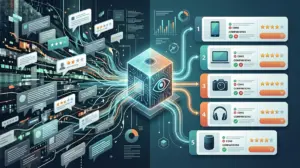
A customer feedback analyzer is a tool that collects reviews, survey responses, support tickets, chat logs, and social comments, then turns that unstructured feedback into usable insights. Instead of reading hundreds of comments manually, teams use it to detect sentiment, recurring complaints, feature requests, service issues, and product strengths fast enough to act on them.
For buyers comparing options, the best customer feedback analyzers do four things well: centralize feedback from multiple channels, classify comments accurately, surface trends clearly, and make it easy to share findings with product, support, marketing, and leadership teams.
What a customer feedback analyzer actually does
At a practical level, this type of tool ingests feedback from sources such as review platforms, NPS and CSAT surveys, app store comments, CRM notes, email replies, and help desk conversations. It then uses rules, tagging, or AI-based language analysis to organize that feedback into themes.
Most tools are built to answer questions like:
- What are customers praising most often?
- Which problems are increasing month over month?
- How positive or negative is sentiment by product, location, or support team?
- Which feature requests appear often enough to justify action?
- What issues are hurting ratings, retention, or conversion?
Stronger platforms go beyond dashboards. They let teams drill into exact comments, compare segments, trigger alerts, and export findings into product roadmaps or service improvement plans.
When to use a customer feedback analyzer
You should use one when feedback volume is too high for manual review or when important customer signals are spread across disconnected systems. It is especially useful for businesses that already collect reviews and survey data but struggle to turn it into decisions.
Best-fit use cases
A customer feedback analyzer is usually worth the investment when you need to:
- Track review trends across stores, locations, or product lines
- Find the root causes behind poor ratings or rising churn
- Prioritize product fixes based on recurring complaints
- Monitor service quality across support channels
- Compare customer sentiment before and after launches or policy changes
It is less useful if your team receives only a small amount of feedback and can review comments manually without delay.
Core features to compare before buying
Not every customer feedback analyzer is equally strong. Some are built for enterprise voice-of-customer programs, while others are lightweight review-monitoring tools. Buyers should compare feature depth, data coverage, and reporting clarity rather than choosing on AI claims alone.
Data source coverage
The first question is where the tool can pull feedback from. A good fit should support the channels your team already uses, such as survey tools, review sites, support platforms, CRM systems, and app feedback. If integrations are weak, the analysis will be incomplete from the start.
Sentiment analysis quality
Sentiment scoring is one of the most marketed features, but accuracy varies widely. Better tools can detect mixed sentiment, context, and recurring negative themes rather than labeling every comment as simply positive or negative. If your business operates in a technical or regulated category, custom vocabulary support matters.
Topic and theme detection
This is often the feature with the biggest commercial value. The tool should identify repeated topics such as delivery delays, billing confusion, onboarding issues, missing integrations, or staff friendliness. Strong analyzers let you edit categories, merge themes, and create custom tags that match your business.
Filtering and segmentation
Useful analysis depends on slicing feedback by product, plan, region, customer type, store, team, or date range. Without segmentation, dashboards can hide the real issue. For example, an overall rating may look stable while one location or subscription tier is deteriorating quickly.
Reporting and alerts
Decision-makers need reports they can understand quickly. Look for trend charts, theme summaries, sentiment breakdowns, and shareable dashboards. Alerts are valuable when negative feedback spikes, a competitor mention increases, or a known issue starts appearing more often.
Workflow and actionability
The best tools do not stop at analysis. They help teams assign issues, add notes, route feedback to product owners, and track whether recurring problems were resolved. If the platform cannot connect insight to action, it becomes another dashboard no one uses.
How buyers should compare customer feedback analyzer tools
Comparison should start with the decision you want the tool to improve. Some buyers need review management and reputation tracking. Others need product insight from surveys and support conversations. Those are related needs, but not identical categories.
Questions to ask during evaluation
Use these questions to separate polished demos from genuinely useful tools:
- Which feedback sources are native integrations and which require manual import?
- Can the system detect custom themes relevant to our industry?
- How easy is it to validate or correct AI-generated tags and sentiment?
- Can we compare trends by team, product, location, or customer segment?
- What reports can be shared automatically with stakeholders?
- Does the tool support case management, routing, or follow-up tasks?
- How far back can historical feedback be imported for trend analysis?
What separates stronger tools from weaker ones
Stronger tools make it easy to move from “customers are unhappy” to “billing complaints rose 27% after the checkout update, mainly among annual-plan users.” Weaker tools stay at a high level, offering attractive sentiment charts without enough detail to support decisions.
In reviews and side-by-side comparisons, the most common strengths buyers praise are setup speed, dashboard clarity, and flexible tagging. The most common complaints are poor integration coverage, shallow analysis, noisy AI summaries, and pricing that scales badly with data volume.
Practical benefits for teams
- Spot recurring complaints before ratings drop further
- Prioritize fixes using real customer language
- Reduce manual review time for surveys and reviews
- Give product and support teams one shared view of issues
Short workflow example
A SaaS company connects its survey tool, app reviews, and support platform to a customer feedback analyzer. Over 30 days, the tool flags a rising negative theme around onboarding and identifies repeated phrases related to setup confusion. The customer success team reads the linked comments, confirms the issue affects new users on one plan, and updates the onboarding flow. In the next reporting cycle, onboarding complaints fall and CSAT improves. The value is not the dashboard itself; it is the speed from signal to fix.
Common pros and cons
Pros
Customer feedback analyzers can save large amounts of manual effort, uncover patterns that would otherwise be missed, and help teams justify product or service changes with evidence. They are particularly useful for multi-location businesses, software companies, ecommerce brands, and support-heavy service organizations.
Cons
Results depend heavily on data quality, integration completeness, and setup discipline. AI labeling can still misread sarcasm, niche terminology, or mixed comments. Some tools also look affordable initially but become expensive as response volume, seats, or reporting needs grow.
Who should buy one first
The strongest candidates are teams already receiving meaningful feedback volume and making decisions across multiple channels. Product managers, CX leaders, support operations teams, reputation managers, and multi-site operators usually see the clearest return. If your current process involves spreadsheets, manual tagging, and delayed reporting, a dedicated analyzer can quickly become easier to justify.
If your main goal is public review response and star-rating monitoring, choose a platform with strong reputation management features. If your main goal is product improvement, choose one with deeper text analysis, tagging controls, and segmentation. If you need both, compare carefully because many tools are stronger on one side than the other.
FAQ
Is a customer feedback analyzer the same as review management software?
No. Review management focuses on monitoring and responding to public reviews, while a customer feedback analyzer is broader and usually includes surveys, support conversations, and internal feedback sources.
Can small businesses benefit from one?
Yes, but mainly when feedback volume is high enough to create manual bottlenecks. Smaller teams with limited feedback may not need a dedicated platform yet.
How accurate is AI sentiment analysis?
It can be very useful for trend detection, but accuracy varies by vendor, industry language, and setup quality. Buyers should test real sample data before committing.
What is the most important feature to compare?
For most buyers, it is the combination of data source coverage and theme detection. If the tool cannot collect the right feedback or classify it meaningfully, the rest of the reporting matters less.