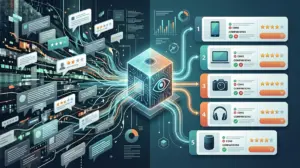
Review Influence Analyzer is a review-intelligence tool that shows which customer comments most affect product perception, star ratings, and buying decisions. Instead of only counting how many reviews a product has, it helps you identify the themes, phrases, and sentiment patterns that actually move shoppers toward or away from a purchase. For buyers comparing products, software, tools, or services, that matters because the most influential reviews are often not the longest or the most recent. They are the ones that repeatedly shape trust, highlight deal-breaking issues, and explain why one option wins over another.
What Review Influence Analyzer does
A Review Influence Analyzer scans review content and surfaces the comments that carry the most weight in a comparison. In practical terms, it looks at patterns such as recurring praise, repeated complaints, sentiment intensity, topic frequency, rating distribution, and language that signals strong purchase impact. A good analyzer can separate minor gripes from serious objections, and it can show whether negative reviews focus on setup, support, durability, billing, usability, or performance.
For example, two products might both hold a 4.3-star average, but one may have highly influential complaints about reliability while the other mainly gets minor criticism about packaging or onboarding. That difference is often more useful than the headline score.
What it usually measures
Most review influence tools focus on a mix of signals:
- Sentiment by topic, not just overall rating
- Review themes that appear across many buyers
- Language linked to purchase confidence or regret
- Outlier reviews that disproportionately affect perception
- Trends over time, such as worsening support or improving quality
When to use a Review Influence Analyzer
Use it when a simple star rating is not enough to make a confident buying decision. This is especially useful in crowded categories where several options appear similar on the surface. If you are comparing software subscriptions, home products, business tools, or local services, review influence analysis helps you move beyond averages and understand what buyers actually care about most.
It is also valuable when reviews are mixed or polarized. A product with both strong praise and sharp criticism can be difficult to judge quickly. The analyzer helps clarify whether the negative feedback points to a real risk or just a niche complaint that will not matter to most buyers.
Best-fit buying situations
A Review Influence Analyzer is most useful when:
- You are comparing two to five shortlisted products
- Ratings are close and hard to separate
- You need to spot recurring complaints fast
- You want to know whether recent reviews changed the picture
- You are buying for a team, client, or higher-cost purchase
How it helps compare products faster
The main advantage is speed with context. A standard review feed forces you to read dozens of comments manually. An analyzer turns that into a clearer buying view by grouping feedback into meaningful decision factors. Instead of asking, “Is this rated well?” you can ask, “What do buyers consistently trust, and what repeatedly causes returns, cancellations, or disappointment?”
That makes comparisons more commercially useful. If one project management tool gets praised for automation but criticized for support response times, while another gets weaker feature scores but stronger onboarding feedback, the better choice depends on your actual priorities. The analyzer helps expose those trade-offs quickly.
Practical benefits
- Reduces time spent reading repetitive reviews
- Highlights likely deal-breakers before purchase
- Shows whether complaints are isolated or systemic
- Makes side-by-side comparisons more evidence-based
What to look for in a good analyzer
Not every review tool is equally useful. Some only summarize sentiment at a high level, which can hide important details. A stronger Review Influence Analyzer should let you drill into categories, compare competitors, and see which review themes drive positive or negative buying signals.
Key features worth prioritizing
Look for these capabilities when evaluating tools:
Topic-level analysis: You should be able to separate price, quality, support, ease of use, delivery, and reliability rather than seeing one blended sentiment score.
Influence weighting: The tool should identify which reviews or themes have outsized impact, not just which are most common.
Trend tracking: Recent review shifts matter. A product improving over the last six months may be safer than an older average suggests.
Comparison views: Side-by-side analysis is essential if you are choosing between competing products or vendors.
Pros and cons extraction: Fast summaries are useful if they are tied to actual review evidence rather than generic labels.
How to interpret the results without getting misled
A Review Influence Analyzer is only as useful as the judgment applied to its output. High-frequency complaints are important, but so is severity. A common complaint about color options matters less than a smaller number of reviews reporting failed integrations or repeated outages. Buyers should weigh impact, not just volume.
You should also check whether the review base is broad enough to trust. A product with 40 reviews and dramatic swings may need more caution than one with 4,000 reviews showing stable patterns. Recency matters too. If older reviews mention issues that newer reviews no longer repeat, the vendor may have fixed the problem.
Common review signals that deserve extra attention
Pay closer attention when influential reviews mention:
- Refund difficulty or hidden charges
- Reliability failures or downtime
- Poor customer support during urgent issues
- Misleading product descriptions
- Repeated setup or integration problems
Short workflow example
You are choosing between three email marketing platforms with similar ratings. First, load review data into the analyzer and compare topic sentiment for deliverability, automation, support, and pricing. Next, sort by influential negative reviews to see which complaints repeatedly change buyer recommendations. Then check recent review trends to confirm whether support quality is improving or declining. Finally, shortlist the platform with the strongest positive influence around the features you need most and the fewest severe recurring complaints.
Who gets the most value from it
This type of tool is especially useful for practical buyers who want evidence, not marketing claims. Small business owners can use it to compare software and service providers. Ecommerce shoppers can use it to identify products with hidden quality issues. Procurement teams can use it to reduce risk when multiple vendors look similar on paper. Review publishers and comparison sites can also use it to create sharper pros-and-cons summaries backed by actual buyer feedback.
Review Influence Analyzer vs basic review summaries
A basic review summary tells you what people said most often. A Review Influence Analyzer tells you what matters most in the purchase decision. That difference is important. Frequency alone can overvalue minor annoyances, while influence analysis can reveal that a smaller set of reviews is shaping trust, conversion, and recommendation intent much more strongly.
For quick buying decisions, that makes the analyzer the more useful option. It gives you a stronger basis for comparing products with similar ratings, especially when you need to understand risk before spending money or committing to a subscription.
FAQ
Is a Review Influence Analyzer only useful for businesses?
No. Individual buyers can use it to compare products faster, especially in categories with hundreds of reviews and close ratings.
Can it replace reading reviews manually?
Not completely. It is best used to narrow the field, spot patterns, and identify the few reviews you should read closely before buying.
Does it work better than star ratings alone?
Yes, because it explains why ratings look the way they do and which review themes are most likely to affect your satisfaction after purchase.
What is the biggest advantage?
It helps you separate superficial popularity from meaningful buyer evidence, which leads to faster and more confident comparisons.