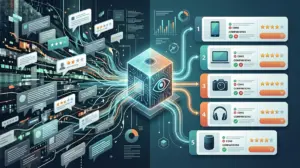
A review tone checker analyzes the wording of customer reviews, product feedback, support comments, or internal QA notes to identify sentiment, emotional intensity, and language patterns that affect how a review is perceived. In practice, it helps teams quickly spot whether a review sounds positive, negative, neutral, overly aggressive, vague, biased, or inconsistent with brand standards. For buyers, sellers, and software teams comparing tools, the best review tone checkers go beyond simple sentiment scoring and show why a review reads a certain way, which phrases trigger that score, and how to rewrite unclear or risky language.
What a review tone checker actually does
The core job of a review tone checker is to evaluate text and classify tone. Depending on the tool, that can include sentiment analysis, intent detection, toxicity checks, emotional labeling, and readability scoring. A basic checker may only flag a review as positive or negative. A stronger option will also identify whether the review sounds trustworthy, balanced, sarcastic, frustrated, promotional, or potentially fake.
For commercial use, this matters because review quality influences conversion, moderation speed, support efficiency, and brand credibility. If you manage product reviews at scale, a tone checker can help separate genuine criticism from abusive content, surface useful feedback faster, and make published reviews more consistent and easier to compare.
Common outputs to expect
Most review tone checker tools provide a mix of scores, labels, and suggested edits. The most useful outputs usually include sentiment rating, confidence score, highlighted trigger phrases, tone categories, and rewrite recommendations. Some also add spam probability, policy risk, or authenticity signals.
When to use a review tone checker
Use a review tone checker when review volume is too high to assess manually, when moderation needs to be faster, or when tone consistency affects trust and buying decisions. It is especially useful for ecommerce teams, SaaS companies, marketplaces, agencies, and publishers that rely on user-generated content or expert reviews.
Best-fit use cases
A review tone checker is most useful in these situations:
- Moderating customer reviews before publication
- Checking whether review summaries sound balanced and credible
- Filtering abusive, manipulative, or fake-sounding submissions
- Helping support or QA teams rewrite feedback into clearer, actionable language
When a basic sentiment tool is not enough
If your team only needs a rough positive-versus-negative score, a lightweight sentiment tool may be enough. But if you compare products, publish expert reviews, or manage public feedback at scale, you will usually need more context. A review that says, “Great idea, terrible execution,” is mixed, not simply negative. A sentence like, “This is unreal,” may be positive or skeptical depending on context. Better tools handle this nuance more reliably.
How to compare review tone checker tools
Not every tone checker is built for review content. Some are general writing assistants, while others are moderation systems or customer feedback analytics platforms. The right choice depends on whether you need editorial guidance, moderation controls, analytics, or API access.
Accuracy on short, messy review text
Reviews are often brief, emotional, and inconsistent. They may include slang, typos, sarcasm, and mixed sentiment in a single sentence. When comparing tools, test them on real examples from your category. A strong review tone checker should perform well on short-form text, not just polished paragraphs.
Explainability of scores
A score without reasoning is hard to trust. The best tools highlight the exact words or phrases that influenced the result. This is useful for moderation teams, editors, and product managers who need to justify why a review was flagged, rewritten, or prioritized.
Customization and brand fit
Some businesses want blunt reviews published as-is. Others need a more neutral, policy-safe tone. Look for tools that let you adjust thresholds, define prohibited language, or train models on your own review data. This is especially important for regulated sectors, marketplaces, and brands with strict publishing standards.
Workflow and integrations
If the checker lives outside your review pipeline, adoption tends to drop. Practical options connect with CMS platforms, help desks, ecommerce systems, spreadsheets, or internal moderation tools. API access is valuable if you want automated scoring before content goes live.
Pros and cons of using a review tone checker
Pros
A good review tone checker can speed up moderation, improve consistency, and make reviews more commercially useful. It helps teams identify reviews that are informative versus emotional, balanced versus misleading, and authentic versus suspicious. For publishers and comparison sites, it can also improve editorial quality by making review language easier for readers to trust.
Cons
Tone checkers are not perfect at sarcasm, context, or category-specific language. Some over-flag strong opinions, while others miss subtle manipulation or fake enthusiasm. Tools that rely on generic sentiment models may flatten nuanced reviews into simplistic labels. That means human review still matters for high-value content, disputed claims, or edge cases.
Practical workflow example
A software marketplace receives 500 new reviews per week. The team uses a review tone checker to score each submission for sentiment, toxicity, and clarity before publication. Reviews flagged as abusive are held for moderation. Reviews marked as mixed but informative are published with minimal edits. Reviews with vague praise like “Amazing product, changed everything” are routed to a team member who requests more specific detail. This reduces moderation time while improving the quality of published feedback.
What buyers should look for in ratings and review analysis tools
If you are comparing review tone checker software, focus less on marketing claims and more on decision-ready features. The strongest products usually combine review analysis with moderation support, reporting, and practical editing help.
Features worth prioritizing
Look for tools that offer:
- Sentence-level tone detection, not just document-level scoring
- Clear labels for mixed sentiment and emotionally charged language
- Flagging for abuse, spam, and suspicious review patterns
- Editable rules, thresholds, or category-specific customization
- Exportable reports or integrations for moderation workflows
Best choice by team type
Editorial teams usually benefit most from tools with rewrite suggestions and explainable scoring. Ecommerce brands often need moderation and spam detection first. SaaS teams may prefer platforms that combine review analytics with customer feedback categorization. Agencies often value flexible reporting and multi-client workflow support.
How Five Reviews would assess a review tone checker
At Five Reviews, the most useful rating criteria for this category are accuracy, clarity of scoring, moderation value, ease of integration, and practical impact on publishing decisions. A high-rated tool should help users act faster, not just generate another dashboard. If a checker cannot explain why a review was flagged or cannot handle mixed sentiment, its value drops quickly for real buying and moderation decisions.
FAQ
Is a review tone checker the same as sentiment analysis?
No. Sentiment analysis is usually one part of it. A review tone checker may also assess emotional intensity, toxicity, clarity, bias, and authenticity signals.
Can a review tone checker detect fake reviews?
Some tools can flag suspicious language patterns, but they do not prove fraud on tone alone. Fake review detection works best when tone analysis is combined with behavioral and account-level signals.
Who benefits most from using one?
Marketplaces, ecommerce brands, SaaS companies, publishers, and agencies that handle large volumes of reviews or publish comparison content benefit most.
Should review tone checking replace human moderation?
No. It should reduce manual workload and improve consistency, but human review is still important for edge cases, legal risk, and nuanced feedback.