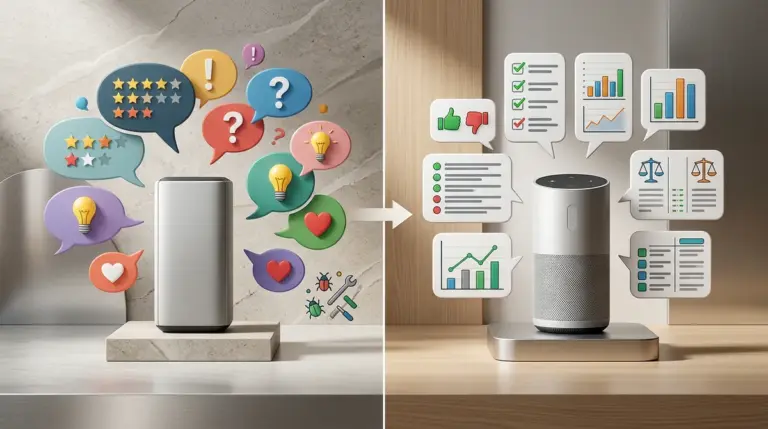


Most product reviews fail because they prioritize the search engine over the buyer’s friction points. When a user searches for a review, they are rarely looking for a rehashed list of technical specifications that they could find on the manufacturer’s landing page. They are looking for a reduction of risk. They want to know how a product fails, where the marketing copy exaggerates, and how it performs relative to the specific alternative they are currently considering.
Utility in a review is defined by its ability to move a reader from a state of indecision to a confident "yes" or "no." This requires moving beyond descriptive language and into the realm of comparative data and first-party testing.
The Necessity of First-Party Evidence
Google’s focus on Experience, Expertise, Authoritativeness, and Trustworthiness (E-E-A-T) has codified what users have instinctively wanted for years: proof that the reviewer actually touched the product. A review that lacks original photography, custom data visualizations, or specific anecdotal evidence is often dismissed as "thin content."
Best for: Establishing immediate trust with high-intent buyers who are skeptical of affiliate-heavy niche sites.
To provide actual utility, a review must include:
- Original Media: Photos showing the product in a real-world environment, not just press kit renders. For software, this means unedited screenshots of the dashboard under load.
- Quantitative Testing: Instead of saying a laptop has "great battery life," a useful review states that it "lasted 11 hours and 22 minutes during a continuous 4K video playback loop at 200 nits brightness."
- Longevity Reports: Reviews written after 24 hours of use are surface-level. Utility increases exponentially when a reviewer provides a "six months later" update regarding durability or software stability.
The Failure of Spec-Sheet Regurgitation
Many reviewers fall into the trap of "feature listing." Listing that a camera has a 24.2-megapixel sensor is a baseline fact, not a review. A useful review explains that the sensor’s readout speed is fast enough to eliminate rolling shutter during handheld pans, making it viable for specific types of videography. Utility is found in the translation of a feature into a tangible benefit or a documented limitation.
Benchmarking Against Direct Competitors
A product does not exist in a vacuum. A buyer’s decision is almost always a choice between Product A and Product B. If a review evaluates a CRM but never mentions how its automation builder compares to the industry leader, the review is incomplete. Useful reviews provide a "competitive landscape" that helps the reader understand positioning.
When comparing, use specific metrics. If you are reviewing a project management tool, compare the "time to task creation" against its primary rival. If you are reviewing a mechanical keyboard, compare the decibel level of the keystrokes against a standard office membrane keyboard. These benchmarks give the reader a frame of reference that technical specs cannot provide.
Pro Tip: Always include a "Who This Is Not For" section. By explicitly disqualifying certain user types, you increase the credibility of your recommendation for the target audience. A product that claims to be for everyone usually serves no one well.
Identifying the Ideal User Profile
Utility is subjective. A review of a high-end enterprise SEO suite is useless to a freelance blogger, even if the review is technically accurate. To be useful, the content must segment its findings based on user personas. A granular breakdown allows readers to self-identify.
Best for: Reducing churn and bounce rates by aligning the product’s capabilities with the user’s actual budget and technical skill level.
Addressing Edge Cases and Failure Points
The most valuable part of a review is often the "Cons" section. However, generic cons like "it's expensive" or "the UI takes time to learn" are filler. Useful critiques focus on specific workflow bottlenecks or hardware limitations. For example, "The software lacks a bulk-export feature for CSVs, which adds 20 minutes of manual work for agencies managing more than 50 clients." This level of detail allows a buyer to decide if that specific limitation is a dealbreaker for their specific use case.
Structural Elements That Enhance Utility
The layout of a review impacts its utility as much as the prose. Most readers are looking for specific answers and will scan the page to find them. If those answers are buried in long-form paragraphs, the review loses its commercial value.
- The Verdict Summary: A high-level summary at the top of the page that covers the "Bottom Line." This should include the price, the primary strength, and the primary weakness.
- Data Tables: Side-by-side comparisons of technical specs or performance benchmarks.
- The "Switching" Context: Address the difficulty of moving from a competitor to this product. Does it have an import tool? Is the API documentation robust?
Auditing Your Review Content for Utility
To ensure your reviews remain commercially viable and useful for a sophisticated audience, you must audit them against a "Utility Checklist." If your content is simply a synthesized version of other reviews found on the first page of search results, it offers zero incremental value. You must provide a "unique contribution."
Ask if your review answers these questions: Does it solve a specific doubt? Does it provide data that cannot be found elsewhere? Does it clearly state who should avoid the product? If the answer to any of these is no, the review is likely adding to the noise rather than helping the buyer. High-utility reviews are built on the foundation of rigorous testing and the courage to highlight flaws that the manufacturer would prefer to hide.
Frequently Asked Questions
How long should a useful product review be?
Length should be dictated by the complexity of the product. A review of a simple consumer accessory might only need 800 words, while an enterprise software platform may require 3,000 words to cover integrations, security, and scalability. Focus on information density rather than hitting a specific word count.
Should I include negative feedback if I want to earn affiliate commissions?
Yes. Honesty increases conversion rates. When a reader sees a balanced review that highlights genuine flaws, they are more likely to trust the recommendation when you say the product is the right fit for a specific use case. Overly positive reviews are often perceived as biased and untrustworthy.
What is the most important element of a product review?
The most important element is "Proof of Use." Whether through custom data, original photography, or specific workflow examples, you must demonstrate that the review is based on actual experience rather than a synthesis of existing online information.
How often should I update a product review?
Software reviews should be audited every six months, as features and pricing change rapidly. Hardware reviews should be updated if a significant firmware update changes performance or if a newer model is released that changes the product's value proposition relative to the market.