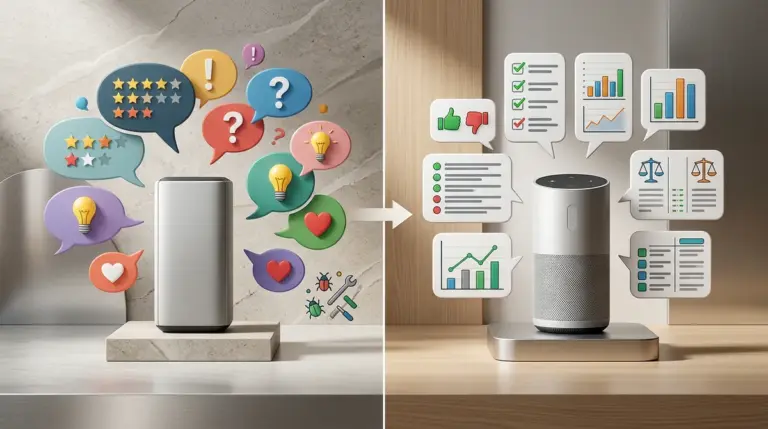


The signal-to-noise ratio in online product reviews has reached an all-time low. Between incentivized "Vine" voices, AI-generated fluff, and aggressive brand reputation management, a five-star rating is no longer a reliable proxy for quality. For procurement officers, agency leads, and professional buyers, the goal isn't just to find "good" products; it is to identify operational friction before capital is committed. Reading reviews effectively requires a shift from passive consumption to active data extraction. This is why understanding how launch hype distorts reviews is critical for professional buyers seeking genuine insights.
The Semantic Markers of Authenticity
Authentic reviews possess a specific linguistic profile. When a user has actually integrated a software tool into their workflow or used a hardware component under stress, their language shifts from abstract adjectives to concrete nouns and situational verbs. If a review relies heavily on words like "amazing," "game-changer," or "best ever" without mentioning a specific use case, it is likely marketing collateral disguised as feedback.
Quantifiable vs. Qualitative Feedback
High-quality reviews focus on metrics and specific limitations. Look for reviewers who mention exact figures: "reduced latency by 15ms," "handles 5,000 concurrent sessions before throttling," or "battery life dropped to 20% after four hours of 4K rendering." These details are difficult for low-effort review farms to fabricate because they require actual testing. Conversely, qualitative praise like "the interface is very intuitive" is subjective and often used by reviewers who haven't spent more than five minutes with the product. Focusing on these quantitative details will help you compare product reviews across sites more effectively.
The Three-Star Sweet Spot
The most valuable data points are almost always found in the three-star and four-star categories. One-star reviews are frequently the result of "user error," shipping delays, or isolated "lemon" units, while five-star reviews are often written during the "honeymoon phase" or under the influence of a post-purchase incentive.
Three-star reviews represent the middle ground of objective analysis. These users usually liked the core value proposition but encountered specific "edge cases" or technical limitations that prevented a perfect score. When reading these, look for "The Trade-off." Every product has one. If a review explains that a tool is "excellent for data visualization but lacks a robust API for custom exports," you have found a high-utility data point that allows you to judge the tool against your specific requirements.
Warning: Beware of "Review Hijacking" or "Listing Merging." Some sellers on major marketplaces will take an old listing for a highly-rated, simple product (like a USB cable) and change the details to a complex electronic item. If you see 5,000 five-star reviews for a high-end camera, but the oldest reviews are all talking about "the best socks I've ever owned," the rating is fraudulent.
Detecting Review Velocity and Patterns
Review velocity refers to the frequency at which reviews are posted. A sudden spike of 50 five-star reviews over a 48-hour period for a product that previously received one review a month is a statistical anomaly. This usually indicates a "burst campaign" where a brand pays for a wave of feedback to manipulate search rankings.
Check the timestamps. Authentic feedback typically follows a "long tail" distribution, appearing steadily over months as different users reach the end of their trial periods or product lifecycles. If the language across these high-velocity reviews is semantically similar—using the same specific phrases or focusing on the same secondary feature—it suggests a script was provided to the reviewers.
Cross-Platform Verification Tactics
Never rely on a single platform's ecosystem. Brands have varying levels of control over different review aggregates. To get a complete picture, triangulate data across three distinct types of sources:
- Closed Ecosystems: Sites like G2 or Capterra often require LinkedIn verification, which raises the barrier to entry for fake reviews, though "incentivized" tags are still common.
- Community Discussions: Platforms like Reddit or niche-specific forums (e.g., Stack Overflow for dev tools) offer unpolished, "warts-and-all" discussions where users aren't worried about formatting a formal review.
- Technical Documentation and Changelogs: Often more revealing than reviews, a product’s changelog shows you what users are complaining about. If you see "Fixed bug where exports fail at 1GB" three times in six months, you know the tool has stability issues with large datasets.
Filtering for Operational Friction
For B2B software and professional gear, the most important reviews are those that discuss "The Day 90 Experience." Most reviews are written in Day 1 or Day 7. They don't account for long-term stability, customer support responsiveness, or the difficulty of offboarding data. Search reviews specifically for keywords like "support," "billing," "export," "integration," and "update."
A review that says "The software is great, but it took three weeks for support to fix a seat-license issue" is a major red flag for an agency that needs to scale quickly. This is operational friction—the hidden cost that a five-star rating won't show you.
A Workflow for High-Stakes Procurement
When the cost of a bad purchase includes both capital and lost billable hours, use this vetting workflow to strip away the hype:
First, sort by "Newest" rather than "Top Rated" to see the current state of the product. Software, in particular, can degrade after an acquisition or a botched update. Second, search the review text for "limitations" or "wish list." Professional reviewers often include a "what I'd change" section that reveals the product's ceiling. Third, verify the reviewer's profile. If they have only ever reviewed products from one parent company, or if they have reviewed 50 products in a single day, discard their input entirely.
Finally, look for "Comparative Context." A review that says "Product X is better than Product Y because of [Feature Z]" is worth ten reviews that simply say "Product X is good." This comparative data helps you understand where the product sits in the market hierarchy and whether its price premium is justified by its functional output.
Frequently Asked Questions
How can I tell if a "Verified Purchase" badge is real?
On most platforms, the badge simply means the account bought the item. It does not mean they didn't receive a refund or a PayPal reimbursement from the seller after posting the review. Look for the "Reviewer History" to see if they consistently post five-star reviews for disparate, low-quality items.
Are incentivized reviews always biased?
Not always, but they are structurally inclined to be positive. Reviewers receiving free products often feel a social obligation to the brand or fear being removed from future "seed" programs. Treat incentivized reviews as "feature tours" rather than critical evaluations.
What is the most reliable place to find honest software reviews?
Niche communities and Slack groups are currently the most reliable. Because these are peer-to-peer environments without a "star rating" system, the feedback tends to be more nuanced and focused on technical implementation rather than surface-level aesthetics.
Why should I ignore the "Global Rating" average?
The average is a lagging indicator. It includes versions of the product that may no longer exist and "bought" reviews from months or years ago. A product with a 4.8-star average can still be currently broken if the latest 20 reviews are all one-star complaints about a recent update.